

Park · Leeds · ⭐ 9.5/10 · 2052 reviews · updated: 2026-08-04 20:21:01
Address: Otley Rd, Bramhope, Leeds LS16 8BQ, United Kingdom
Golden Acre Park — a lost Yorkshire Coney Island, replanted as a botanic garden
Golden Acre Park is 179 acres of lake, woodland, marsh and cultivated garden on the north-western edge of Leeds, and it is one of the strangest reinventions in the city’s landscape. For six years in the 1930s this was a full-blown pleasure park with a monorail, hydroplanes, an open-air pool and the largest dance hall in Yorkshire — a deliberate attempt to build a Coney Island for the West Riding. The venture collapsed in 1938, the war finished off the buildings, and in 1945 the council bought the wreckage and turned it into something entirely different: a public garden with four National Plant Collections, a lake alive with waterbirds, and a nature reserve on either flank. Almost nothing of the funfair survives above ground, but its trackbed is still out there in the undergrowth.
Highlights
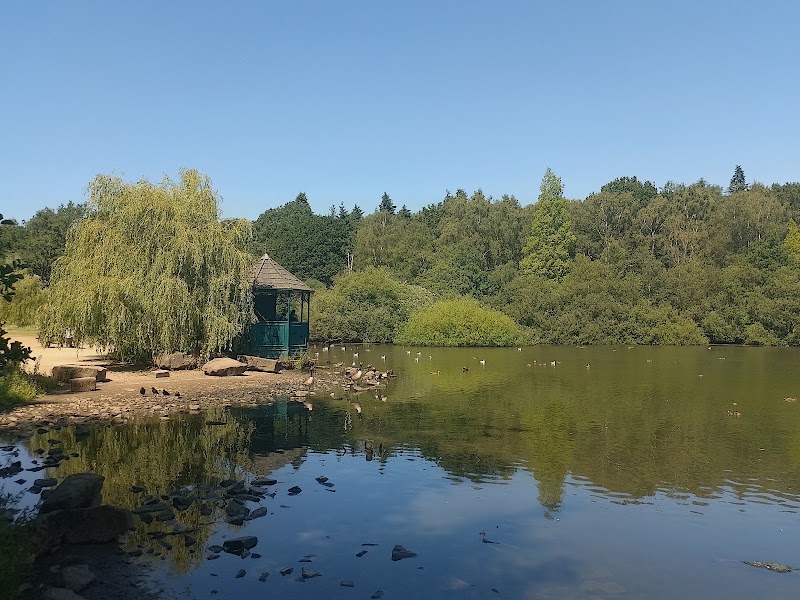
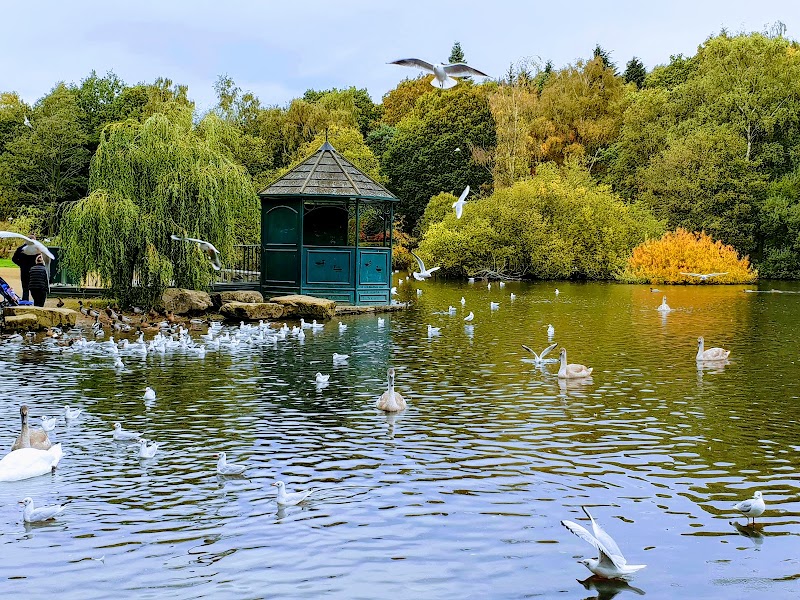
- The lake — formed by damming Adel Beck, once considerably larger than it is now, and the centre of everything here; a resident kingfisher works the margins and great crested grebe, tufted duck, coot and moorhen are all regular.
- Four National Plant Collections — the park holds nationally designated collections of Lilac, Deutzia, Hosta and Hemerocallis, which is an unusual concentration for a municipal park and gives the planting a serious horticultural backbone.
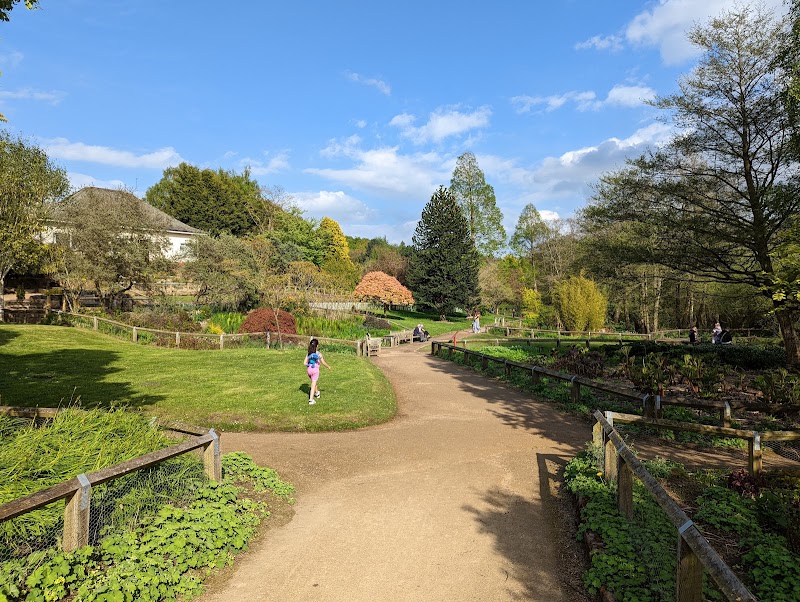
- The demonstration gardens — planted to show what actually performs in this climate and soil, so the beds double as an outdoor reference book for local gardeners.
- The bird feeding shelter — a covered station that brings woodland birds, including nuthatch, within a few feet in winter, and one of the easiest places in Leeds to watch small birds closely.
- Breary Marsh — an alder carr nature reserve on the far side of the main road, reached by a pedestrian tunnel, and one of the wettest and least altered habitats in the district.
- Adel Dam — a Yorkshire Wildlife Trust reserve immediately to the east, with hides and its own pool, which turns a garden visit into a proper birdwatching morning.
- Traces of the railway — sections of the trackbed and platform of the vanished miniature railway still lie under the undergrowth for anyone who knows where to look.
What you’ll find
Golden Acre is best understood as three overlapping places: a formal garden, a lake circuit, and a piece of genuine wetland. Because they run into one another, an hour’s stroll can take you from a designated Hosta collection to standing alder swamp without ever feeling like you have changed venue.
- A surfaced circular path around the lake, level enough for pushchairs and wheelchairs on the main sections, with benches and open water views most of the way round.
- Informal and formal gardens, mixed shrub and herbaceous planting, and mature specimen trees forming a working arboretum.
- A café with indoor and outdoor seating, picnic areas and toilets, concentrated near the entrance side of the park.
- Woodland fringes and marsh where migrant warblers arrive in spring and where the alder carr of Breary Marsh supports plants and insects that need permanently wet ground.
- Long-distance path connections — the Leeds Country Way runs through the park, and the Meanwood Valley Trail links it all the way down to Woodhouse Moor near the city centre.
- A pedestrian tunnel under the main road connecting the car park side and the marsh to the main gardens, so you never have to cross traffic.
Things to do — and who it’s for
- Gardeners — four National Collections and a demonstration garden make this the most instructive place in Leeds to work out what will survive in a Yorkshire border.
- Birdwatchers — kingfisher, grebe, waterfowl and woodland species in one compact site, with the Yorkshire Wildlife Trust hides at Adel Dam next door for the serious sessions.
- Families with young children — a flat lake circuit, ducks, a café and a feeding shelter make a low-effort outing that works even in mediocre weather.
- Walkers on longer routes — the park is a natural staging post on both the Leeds Country Way and the Meanwood Valley Trail, with a café exactly where you want one.
- Photographers — the lake, the reflections and the seasonal collections give this park a much higher hit rate than its modest size suggests.
- Local historians — hunting the platforms and embankments of the vanished 1930s pleasure park is a genuinely satisfying detective walk.
Getting there & practical
The park sits between Bramhope and Adel on the main Leeds–Otley corridor, on the north-western edge of the city, roughly seven miles from the centre. Frequent buses on the X84 service, running from Leeds through Otley to Ilkley, stop right at the park in both directions, and several local Bramhope routes pass the same stops. The nearest railway station is Horsforth, a little over two miles away — walkable in about three-quarters of an hour, or a short taxi ride. There is a car park on the western side, linked to the gardens by the pedestrian tunnel. Entry to the park, the gardens and the collections is free and it is open all year; the café keeps its own hours and the two neighbouring nature reserves, Breary Marsh and the Yorkshire Wildlife Trust’s Adel Dam, are separate sites with their own arrangements. Allow an hour for the lake circuit alone, or half a day to take in the marsh, the reserve and the gardens properly.
When to visit
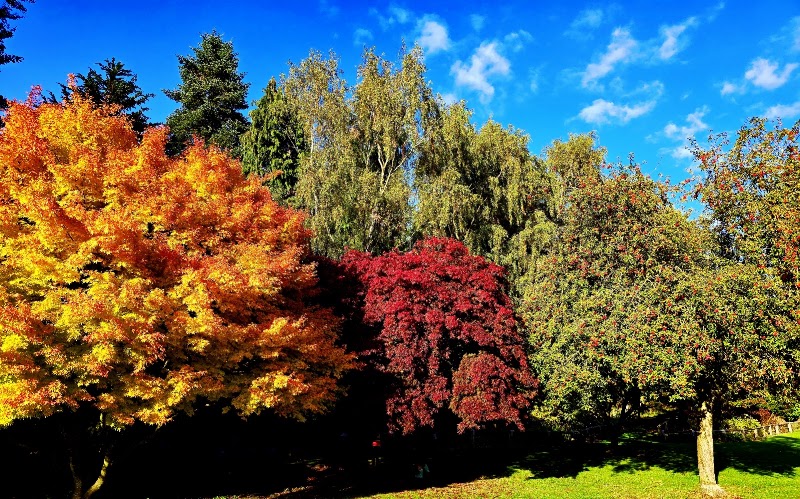
Spring is the loudest season here — migrant warblers arrive in the marsh and lakeside scrub, the lilac collection comes into flower, and the alder carr greens up before the main woodland does. Summer is for the herbaceous collections: the Hemerocallis and Hosta plantings peak, the Deutzia flowers, and the lake path is shaded enough to walk in the heat. Autumn brings the arboretum into colour and pushes waterfowl numbers up on the lake as birds move in from further afield. Winter is quietly the best-kept secret: the feeding shelter is at its busiest, the water is full of duck, the bare trees open up views straight across the lake, and the frozen edges of Breary Marsh are strikingly beautiful. Early morning is the reliable time for the kingfisher in any season.
Good to know
In 1932 a local entrepreneur, Frank Thompson, bought about 137 acres on the road out to Otley and set about building a leisure park to rival Blackpool Pleasure Beach, consciously modelled on New York’s Coney Island. It opened the same year, and the scale of the ambition is hard to overstate: the largest dance hall in Yorkshire, an open-air swimming pool named the Blue Lagoon, hydroplanes and a motorboat circuit on the lake, a monorail, pony and donkey rides, and a miniature railway nearly two miles long that circled the whole lake and even ran a dining car. Thompson had been impressed by the newly opened North Bay Railway at Scarborough and ordered his own locomotive from the Leeds engineering firm Hudswell Clarke in 1932, choosing a different design — a handsome tank engine that was named Robin Hood.
The venture never made money. The park closed in 1938, after just six seasons, and during the war the site was taken over for military training while the buildings and rides fell apart. In 1945 the council bought the land and set about turning a derelict funfair into a botanic garden. The lake was reduced from its original size, partly filled with rubble from demolished buildings and with fly ash brought from the power station at Kirkstall, and the ground was landscaped and replanted. What emerged is what stands today: 179 acres of garden, lake, woodland and marsh, holding the National Plant Collections of Lilac, Deutzia, Hosta and Hemerocallis.
The setting matters as much as the gardens. The lake itself was made by damming Adel Beck, and the water system feeds a chain of habitats — the alder carr of Breary Marsh on the western side, reached through a pedestrian tunnel under the road, and Adel Dam on the eastern side, a nature reserve owned by the Yorkshire Wildlife Trust. Together they hold a bird list that no municipal flowerbed could generate on its own: resident kingfisher, great crested grebe, tufted duck, coot and moorhen on the water, nuthatch and woodpecker in the trees, and migrant warblers in spring. The park is also a junction for two of the region’s walking routes, the Leeds Country Way and the Meanwood Valley Trail, the latter running from here down the valley to Woodhouse Moor. And the funfair has not quite disappeared: stretches of the miniature railway’s trackbed and the remains of its platforms are still traceable in the undergrowth, nearly ninety years after the last train ran.
Visitor tips
- Use the pedestrian tunnel rather than trying to cross at road level — it links the car park and Breary Marsh to the main gardens and is the intended route.
- Bring binoculars even if you are only here for the flowers; the walk from the lilac collection to a kingfisher perch is about five minutes.
- If you want the 1930s pleasure park, walk the outer edges of the lake and look for straight, level embankments running through otherwise uneven ground — that is the old railway.
Questions & answers
Is Golden Acre Park free? Yes. The park, gardens and National Plant Collections are free and open all year. The café operates its own hours, and the neighbouring nature reserves are separate sites.
Was there really a theme park here? Yes — a privately built pleasure park opened in 1932, modelled on Coney Island, with a monorail, hydroplanes, a swimming pool called the Blue Lagoon, the largest dance hall in Yorkshire and a two-mile miniature railway. It closed in 1938 and the council bought the site in 1945.
Can I still see anything of the miniature railway? Not as a working line. Sections of the trackbed and the remains of platforms survive under the undergrowth around the lake, but the locomotive, a Hudswell Clarke tank engine named Robin Hood, is long gone.
What are the National Plant Collections here? Lilac, Deutzia, Hosta and Hemerocallis — four nationally designated collections held in one park, which is unusual for a local authority site.
Is it good for birdwatching? Very. A kingfisher is resident on the lake, and great crested grebe, tufted duck, coot, moorhen and nuthatch are all regular, with migrant warblers in spring. Adel Dam next door is a Yorkshire Wildlife Trust reserve with hides.
How do I get there without a car? The X84 bus between Leeds, Otley and Ilkley stops directly at the park; the nearest railway station is Horsforth, a little over two miles away.
Is it accessible for wheelchairs and pushchairs? The main lake circuit and the garden paths are surfaced and largely level, and the pedestrian tunnel avoids any road crossing. The marsh boardwalks and rougher woodland edges are more demanding.
Can I swim or boat on the lake? No. The Blue Lagoon pool and the motorboats belong to the 1930s; the lake today is managed for wildlife and is not for swimming or boating.
Photos
Show 1 more photos
Visitor reviews
Reviews last updated: 2026-08-04 20:21:01
Data is refreshed monthly. Sources: leedsname.com and editorial picks based on reviews.
A very picturesque park for walks, located just a short distance from Leeds city centre. Easy to reach by public transport (the X84 route from Leeds to Ilkley stops right by the entrance). Around the park there are plent…
Golden Acre Park is one of the best places in Leeds for peaceful walks and enjoying nature. The park is large, with beautiful woodland, gardens and a picturesque lake at its centre. The circular trail along the lake is e…
My happy place, it's so lovely in spring, a great place to visit, there's also a café, a bit pricey but tasty food and coffee.
Lovely park and gardens with a nice café. Wide paths, convenient for dog walking, pushchairs and bikes. The café was clean and with a good choice of food and drinks. The gardens around the café were beautiful, where you…
A very nice park with lots to see. Lots of birds, and the spring blossom is wonderful. It's located next to Adel Crag nature reserve, where there is much more to see. Recommended.