

Park · Leeds · ⭐ 8.9/10 · 1740 reviews · updated: 2026-08-04 20:21:02
Address: Woodhouse Ln, Woodhouse, Leeds LS6 1SJ, United Kingdom
Woodhouse Moor — the first public park Leeds ever bought, and still its liveliest
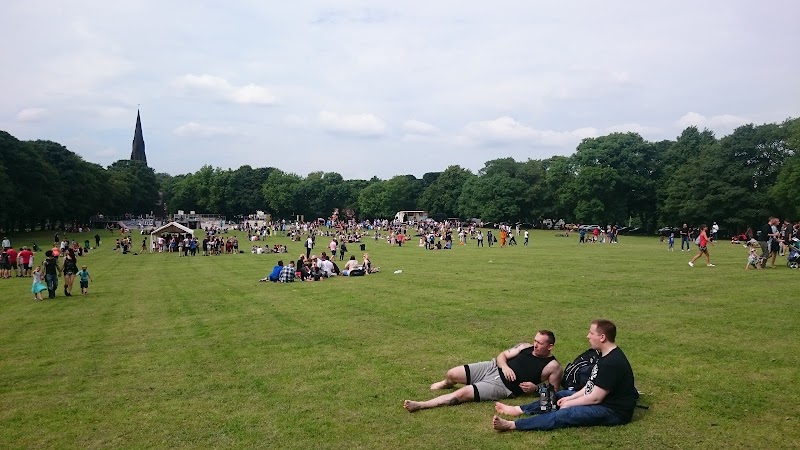
Woodhouse Moor is 26 hectares of grass, gardens and mature trees about a mile from the centre of Leeds, and it holds a title no other green space in the city can claim: in 1857 it became the first park the town ever bought for its people. Locals almost never use its proper name — to most of Leeds it is simply Hyde Park, after the district around it — and its character comes from where it sits. Wedged between two universities and one of the densest student quarters in Britain, it is a park that is used hard, all day and all year: football on the flat, sunbathing on the slopes, skateboarding, allotment gardening, protest marches, festivals and a Saturday morning parkrun. The Victorians called it the lungs of Leeds. It still breathes for the same neighbourhood, just louder.
Highlights
- The three moors — the space is not one park but three linked parts: the formal park with its gardens and statuary, plus Monument Moor and Cinder Moor on the other side of the main road, each with its own crowd and its own uses.
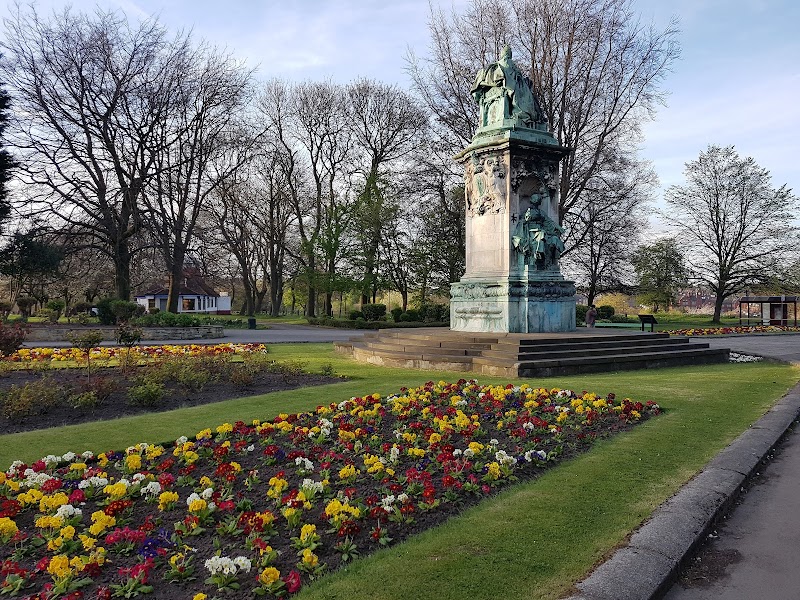
- The Victoria memorial — George Frampton’s monument to Queen Victoria, unveiled on 27 November 1905 outside Leeds Town Hall and moved here in 1937 when the civic centre was replanned.
- The Duke of Wellington — Carlo Marochetti’s equestrian bronze, first erected in front of the Town Hall in the 1850s and likewise exiled to the Moor in 1937; it is a listed monument.
- Sir Robert Peel — William Behnes’s statue of the Prime Minister, originally standing in one of the city’s Georgian squares and relocated to the north corner of the Moor in the same 1937 clearance.
- Henry Rowland Marsden — the statue on Monument Moor commemorating the Leeds machine-maker who rose to be mayor, and the reason that part of the Moor carries its name.
- The skate and BMX park — one of the most-used wheeled sports facilities in inner Leeds, sitting alongside playgrounds, tennis and bowls in a park barely a mile from the city centre.
- The start of the Meanwood Valley Trail — the long-distance path north through the Meanwood valley to Golden Acre Park begins here, so the Moor is a trailhead as well as a park.
What you’ll find
Woodhouse Moor is not a landscape park in the Roundhay sense. It is a big, generous, slightly worn common with formal Victorian bones — avenues of mature trees, ornamental beds, monuments and a long slope that catches the afternoon sun — and it earns its keep by absorbing about three million visits a year, which as of 2005 made it the second most-used urban park in Leeds.
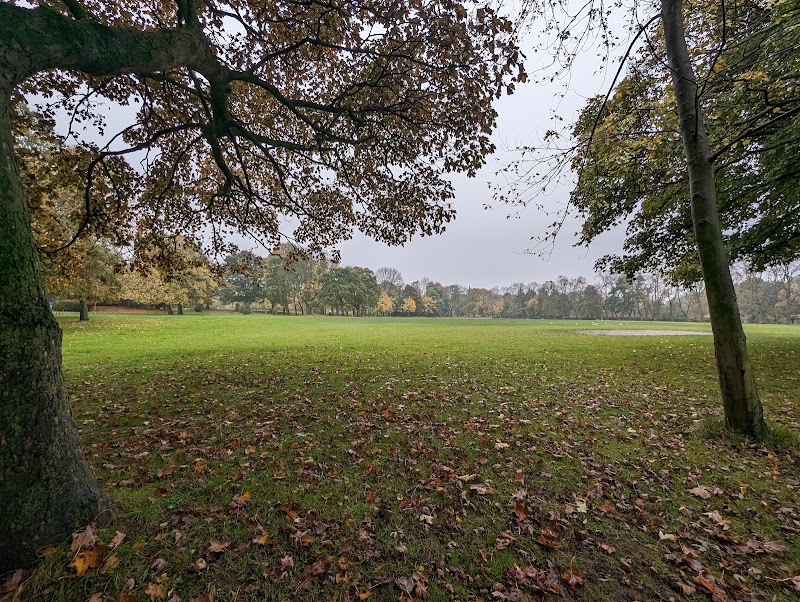
- Broad open grassland on Cinder Moor and Monument Moor, used for football, informal cricket, fairs, festivals and gatherings of every kind.
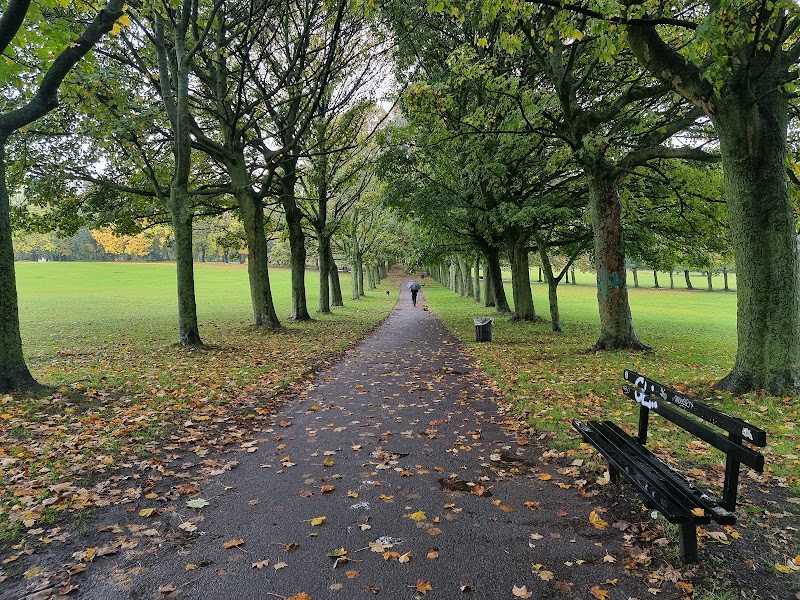
- Formal gardens and bedding in the older, western part, with mature avenues that date from the Victorian layout.
- Four significant pieces of Victorian and Edwardian public sculpture, three of them relocated here in 1937 when the city centre was replanned around the Headrow.
- Playgrounds, tennis courts, bowling, and the skate and BMX park, plus allotments on the park’s fringe.
- A weekly free timed 5km parkrun on Saturday mornings at nine, and Unity Day, the long-running community festival held on the Moor each year.
- Cafés, shops and takeaways immediately around every edge — one consequence of sitting inside a dense residential and student district rather than out in the suburbs.
Things to do — and who it’s for
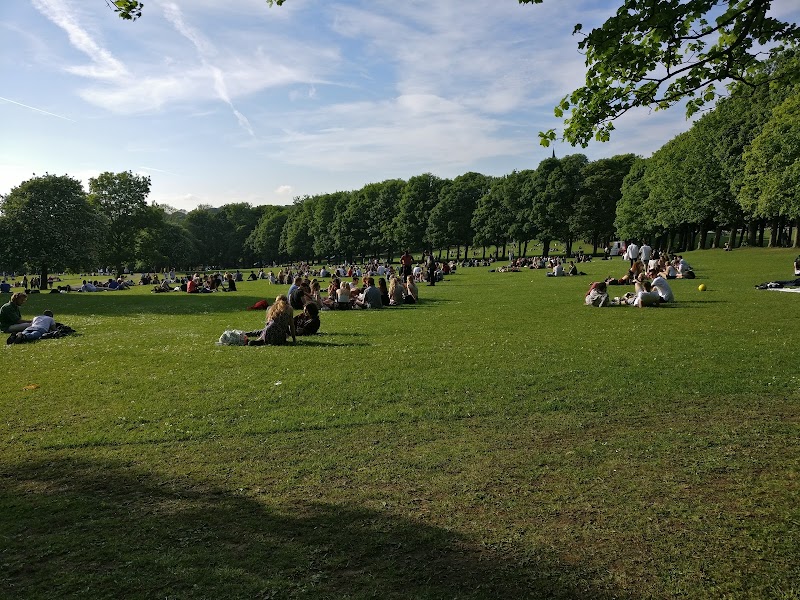
- Students and young residents — this is the back garden of two universities, and on the first warm day of the year the slope is covered end to end; it functions as the neighbourhood’s living room.
- Runners — the Saturday parkrun is one of the most convenient in the city, and the Moor is the natural starting point for the Meanwood Valley Trail if you want a longer route out of town.
- Skaters and BMX riders — the wheeled sports area draws riders from across inner Leeds and is busy from early afternoon onwards.
- Families — playgrounds, level paths and short distances from surrounding streets make it an easy everyday park rather than a day trip.
- History walkers — four statues, an 1857 purchase and a Civil War muster ground make for a dense half-hour of Leeds history in a very small area.
- Event-goers and campaigners — the Moor has been a place of public meetings, concerts and demonstrations since the nineteenth century, and remains the default outdoor gathering ground for the city’s north-west side.
Getting there & practical
The Moor lies about a mile north-west of Leeds city centre, in the Hyde Park and Woodhouse district, close enough to walk from the centre in around twenty minutes and effectively on the doorstep of both the University of Leeds and Leeds Beckett University. Frequent buses run along the Headingley corridor past the park — the 1, 6 and 28 city services among them, with the X84 and X85 to Otley and Ilkley using the same route — so services are among the densest of any park in the city. The nearest railway station is Burley Park, a walk of roughly fifteen minutes, with Leeds City station about a mile away. The park is free, unenclosed and open at all hours; there are no gates and no admission of any kind. Street parking around the edges is residential and heavily restricted, so arriving on foot or by bus is far simpler. Half an hour covers the statues and the formal gardens; an hour is enough to walk all three moors.
When to visit
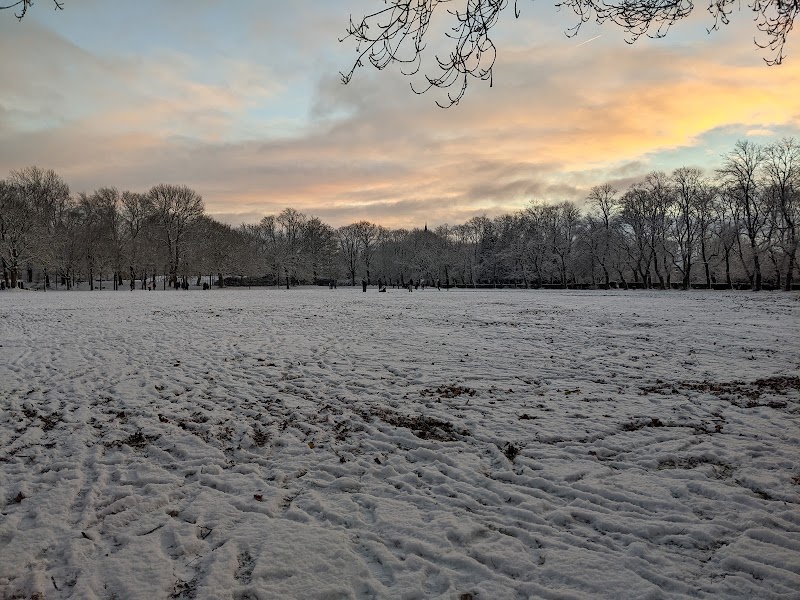
Spring is when the Moor turns back on — bedding goes in, the avenues leaf up, and the first warm weekend fills the south-facing slope with people. Summer is its loudest and most characteristic season: festivals, Unity Day, barbecues, cricket and football on the open moors, and evenings that run late because the surrounding streets never really go quiet. Autumn is the most photogenic time, with the mature avenues turning and the low sun striking the bronze statues; it is also the quietest few weeks, in the gap before the student year hits full stride. Winter strips it to grass, bare trees and monuments, and this is when the Moor is at its most Victorian — a public space designed for air and light in a smoky industrial city, doing exactly the job it was bought to do. Early mornings are calm all year; late afternoons on a warm day are anything but.
Good to know
The Moor is far older than the park. In 1642, during the Civil War, Parliamentary forces under Thomas Fairfax mustered here before moving on Leeds, and during the plague of 1644 townspeople fled the crowded centre and threw up cabins on the open ground. It stayed common land into the industrial era, and in 1837 a reservoir was built on it to serve a growing and unhealthy town — it was covered over in 1863 after repeated accidents.
What turned common into park was a threat. By the 1850s parts of the Moor were being parcelled off for building, and rumours circulated that a large section might be handed over to the army as an encampment. A grassroots campaign in defence of the open ground gathered momentum, and following an Act of Parliament, Leeds Corporation bought the Moor for £3,000 on 19 May 1857 — the first public park the town ever purchased. Queen Victoria visited the following year. By the end of the nineteenth century the Moor was in constant use for cricket, band concerts and political meetings, and the Victorians had given it the nickname that still fits: the lungs of Leeds, a pocket of clean air above a smoke-filled industrial city.
Its collection of statues arrived by accident of town planning. Carlo Marochetti’s equestrian Duke of Wellington was raised in front of Leeds Town Hall in the 1850s; George Frampton’s memorial to Queen Victoria was unveiled outside the Town Hall on 27 November 1905; and William Behnes’s Sir Robert Peel stood in one of the city’s Georgian squares. In 1937, when the civic heart of Leeds was remodelled, all three were removed to Woodhouse Moor, which is why a modest neighbourhood park now carries some of the grandest Victorian sculpture in the city. The fourth, on Monument Moor, commemorates Henry Rowland Marsden, a Leeds machine-maker who became mayor, and gives that section of the Moor its name.
The park today is defined by the neighbourhood that grew around it. Woodhouse Moor sits in one of the most densely populated student districts in the country, which is why it draws roughly three million visits a year — as of 2005 the second most-used urban park in Leeds, behind only Roundhay — and why it has stayed a place of assembly, from Victorian political meetings to the community festival Unity Day and large public gatherings in recent years. It is also the southern trailhead of the Meanwood Valley Trail, which runs north up the valley and eventually reaches Golden Acre Park.
Visitor tips
- Come on a weekday morning if you want the statues and gardens to yourself; by mid-afternoon in term time the Moor belongs to everyone at once.
- Do not drive. Parking around the Moor is residential and heavily restricted, while buses along the Headingley corridor are among the most frequent in Leeds.
- If you have the legs for it, treat the Moor as a starting point rather than a destination and walk the Meanwood Valley Trail north out of the city.
Questions & answers
Why do people call it Hyde Park? Because that is the name of the surrounding district. Woodhouse Moor is the park’s official name, but locally the park and the neighbourhood are used interchangeably.
Is it really Leeds’s first park? Yes. Leeds Corporation bought the Moor for £3,000 on 19 May 1857 following an Act of Parliament, making it the first public park the town ever acquired for its residents.
How big is it and how long does it take to walk? About 26 hectares, or 64 acres, split into three linked sections. Walking all three comfortably takes around an hour; the formal gardens and statues alone take half that.
Why are there so many grand statues in a neighbourhood park? Because in 1937 the centre of Leeds was replanned and its Victorian monuments were moved out. The Wellington, the Victoria memorial and the Peel statue all stood in the city centre before being relocated to the Moor.
Is it free and always open? Yes. It is unenclosed public land with no gates, no admission and no closing time.
Can I get there without a car? Easily — it is a twenty-minute walk from the city centre, Burley Park station is about fifteen minutes away on foot, and the Headingley bus corridor passing the park carries some of the most frequent services in Leeds. Parking nearby is restricted, so buses or walking are the sensible options.
What facilities does it have? Playgrounds, tennis courts, bowling, a skate and BMX park, formal gardens, large open grassland and allotments on the fringe, with cafés and shops in the streets immediately around it.
Is it a good place for events? It always has been. The Moor has hosted cricket, band concerts and political meetings since the nineteenth century, holds the annual Unity Day community festival, and remains the default outdoor gathering ground for this side of the city.
Photos
Show 1 more photos
Visitor reviews
Reviews last updated: 2026-08-04 20:21:02
Data is refreshed monthly. Sources: leedsname.com and editorial picks based on reviews.
A very large park with lots of greenery for picnics, a very large skate park and a playground. A great place to spend time with the family, and it looks stunning from a bird's-eye view. Recommended.
I really enjoyed my visit to Woodhouse Moor! The recently refurbished playground is great for children, and there's also plenty to do at the skate park and the tennis courts. It's a great place for a family day out or ju…
A nice park by my student halls, which I use every day for my trips to the University of Leeds Business School. On sunny days it's a visual treat with its lush greenery.
Various tree lined paths that meander through the park. It looks especially pretty in autumn when the leaves turn a lovely shade of yellow.
Various cafes a short walk from the park.
Every Saturday is the Woodhouse Moor…
A very nice park next to the University of Leeds. Fairly large and very green. There's lots of space and quite a few benches to sit on. Fairly quiet and peaceful, even though Otley Road is practically right next to it, w…