

Leeds has been the birthplace of many notable scientists, biologists, and astronomers who achieved worldwide fame for their discoveries and innovations. Joseph Priestley is another remarkable figure from Leeds, celebrated for his discovery of oxygen through the thermal decomposition of mercuric oxide. His contributions to science extend far beyond this singular achievement. Learn more about the life and work of this distinguished scientist on leedsname.com.
Early Life and Education
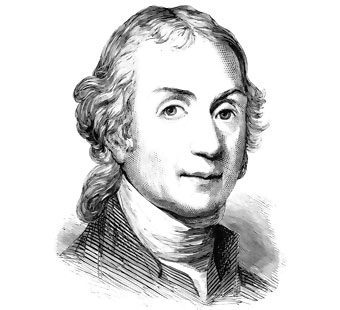
Joseph Priestley was born near Leeds in 1733 into a large family as the eldest of six children. When he was just a year old, his parents sent him to live with his grandfather. Following his mother’s death, Priestley returned home, but he later moved to live with his childless aunt and uncle after his father remarried.
From a young age, Priestley showed exceptional intellectual abilities, prompting his wealthy aunt to provide him with the best education possible.
In 1749, Priestley suffered a severe illness that left him with a stammer, which he believed would be fatal. Despite this challenge, he excelled in studying French, Italian, German, Aramaic, and Arabic. He also gained valuable exposure to higher mathematics, natural philosophy, logic, and metaphysics under the guidance of Reverend George Haggerstone.
Scientific Work and Career Development
Priestley began his career as a preacher in dissenting communities and later opened a private school. His pedagogical talents flourished during his tenure at Warrington Academy, starting in 1761.
In 1766, Priestley established the inverse-square law of electrical force, which he published in a two-volume work the following year. The publication received acclaim from his contemporaries, earning him membership in the Royal Society of London.
As one of the founders of modern chemistry, Priestley made numerous groundbreaking discoveries, particularly in the field of gases. In 1771, he identified the process of photosynthesis, demonstrating that air containing carbon dioxide or combustion byproducts could be restored by placing green plants in the environment. By 1778, he had confirmed that plants absorb carbon dioxide and release oxygen.
Priestley’s other significant discoveries include nitrous oxide (“nitrous air”), hydrogen chloride (“marine acid air”), and ammonia (“alkaline air”). In 1774, he famously isolated oxygen, and by 1799, he had identified carbon monoxide.
Priestley was also deeply interested in optics and authored The History and Present State of Discoveries Relating to Vision, Light, and Colours.
Priestley’s contributions to science were widely recognized, earning him honorary doctorates from the University of Edinburgh and membership in prestigious organizations such as the Royal Society of London and the academies of Paris and St. Petersburg.
In 1762, Priestley married Mary Wilkinson from Wrexham. Their happy marriage allowed Priestley to focus on his scientific pursuits while Mary managed household responsibilities. The couple had a daughter, Sarah, in 1763, and later two sons during their time in Leeds, where Priestley served as a minister at Mill Hill Chapel.
The family frequently moved in search of better-paying positions, despite Priestley’s international acclaim. His longest residency was in Birmingham, from 1780 to 1791.
Priestley supported the French Revolution, believing in the people’s right to overthrow tyranny. His progressive views attracted hostility from conservatives, culminating in a mob attack in July 1791 that destroyed his home, laboratory, and library. Condemned by the public, the attack forced Priestley to emigrate to America in 1794, where he lived until his death in 1804.
Joseph Priestley’s contributions to pedagogy, physics, chemistry, and philosophy have profoundly influenced the development of these disciplines. His work provided a foundation for future scientific advancements. We hope this article has enriched your understanding of this exceptional individual from Leeds.