

Park · Leeds · ⭐ 9.3/10 · 1659 reviews · updated: 2026-08-04 20:21:02
Address: Park Ln, Rothwell, Leeds LS26 0DY, United Kingdom
Springhead Park — the park that Rothwell’s miners built
Twenty-two hectares of clipped lawn, seasonal bedding and rough wooded edge sit on rising ground above Rothwell, and almost none of it would exist without the West Yorkshire coalfield. This is a public park paid for out of miners’ welfare money in the middle of the Depression, laid out in two halves seven years apart, and it still behaves like a village common: brass bands on summer afternoons, a community bonfire in November, a free timed five-kilometre run every Saturday morning, and an aviary sitting at the centre of one of the first dementia-friendly gardens in Britain. Rothwell, wedged between Leeds and Wakefield, is easy to drive past. Its park is the reason not to.
Highlights
- The 1935 half and the 1937 half — the western end was created with a grant from the West Yorkshire Joint District Miners Welfare Committee and opened in 1935; the eastern end was funded by the Yorkshire Miners Union and opened in 1937, and the commemorative gates put up for that opening still stand.
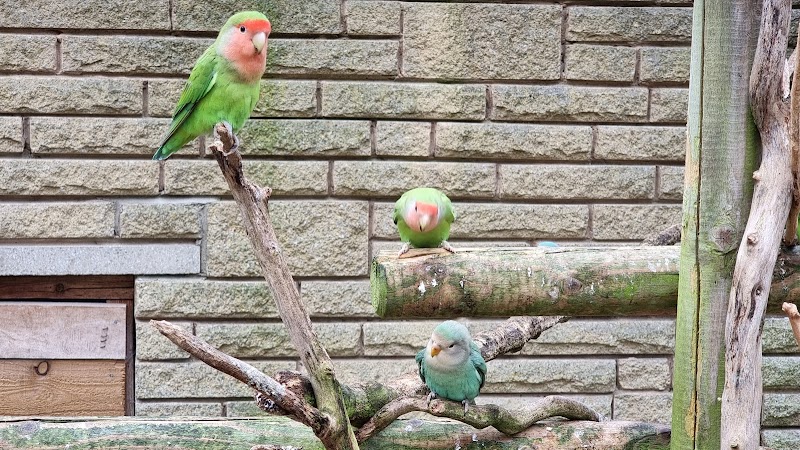
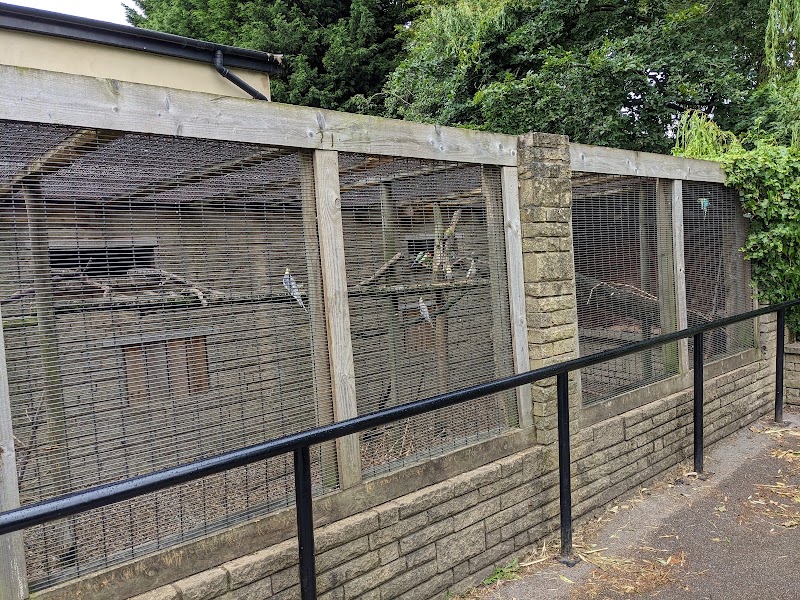
- The aviary — a long-established feature on the lower slope beside the formal gardens, and the fixed point around which the newer sensory planting was designed.
- The dementia-friendly garden — opened in 2017 and among the first of its kind in the United Kingdom, built around the aviary with grants from Leeds City Council and the Rothwell and District Live at Home Scheme, relying on scent, texture, colour contrast and clear sightlines rather than signage.
- Springhead Park House — a former vicarage built in 1871–72 with later extensions, the oldest structure on the site; it predates the park by more than sixty years and is now in business use rather than council hands.
- Crown green bowling — the green was added in 1936, a year after the park first opened, and crown green rather than flat green remains the local code, played on a deliberately domed surface.
- The concrete skatepark — opened in 2016 with ramps and street-style features, deliberately sited well away from the quiet ornamental end.
- Rothwell parkrun — a free, timed five-kilometre event held every Saturday morning at nine o’clock, running roughly two and a half laps of the park.
What you’ll find
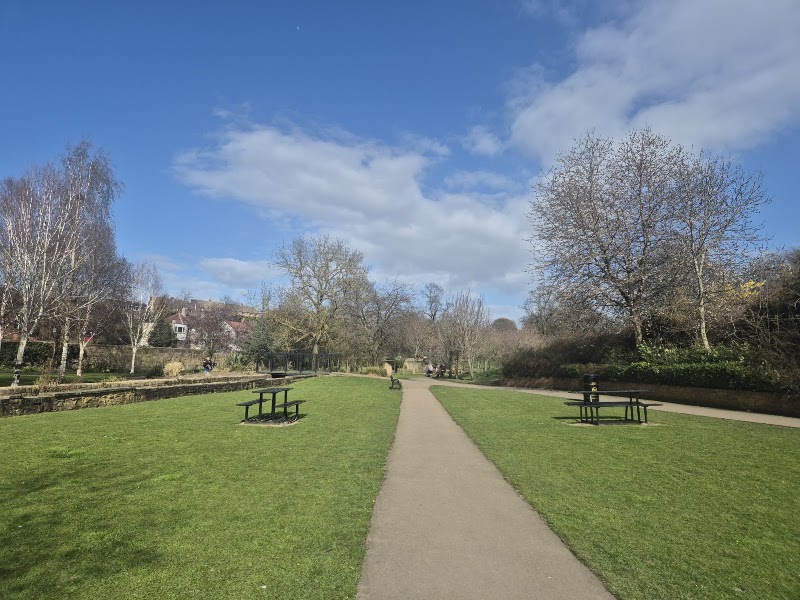
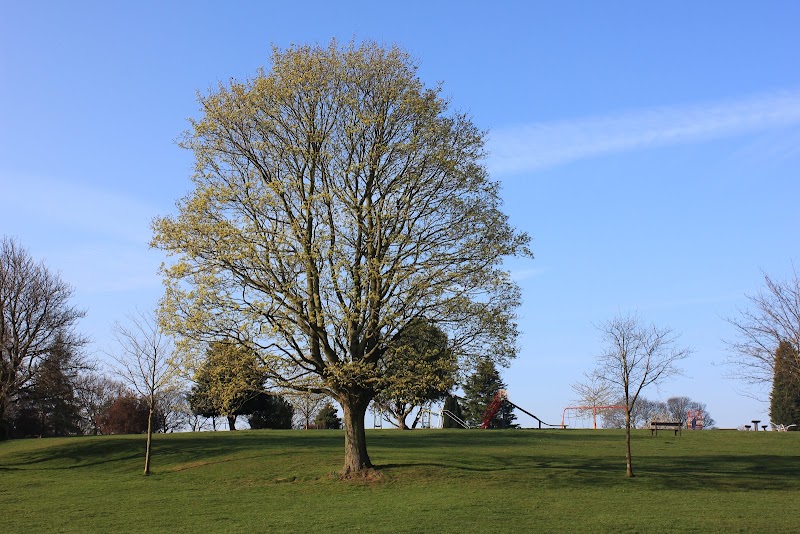
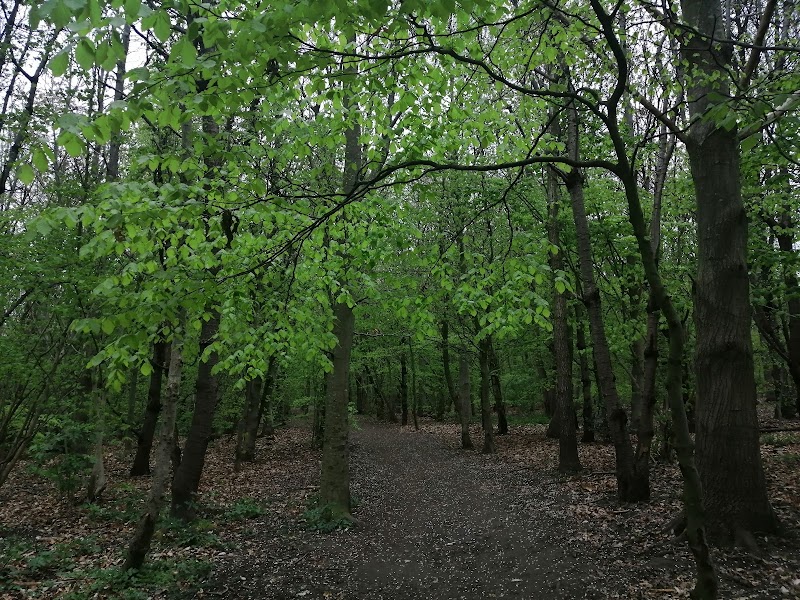
The park reads as a slope. It is formal, ornamental and busy along the top, and gets wilder, wetter and quieter as you drop towards the beck at the bottom. That gives twenty-two hectares an unusual range: you can walk a short tarmac circuit in trainers or take a longer, muddier line through the trees without leaving the same set of gates.
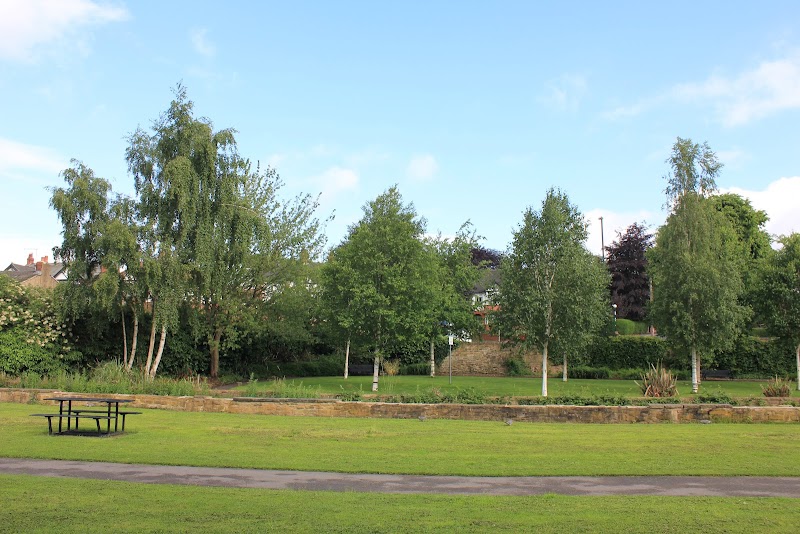
- Ornamental gardens and seasonal bedding, set among mature specimen trees that go back to the original 1930s planting.
- A beck and a wooded dell along the lower boundary, cleared periodically by the park’s volunteer group.
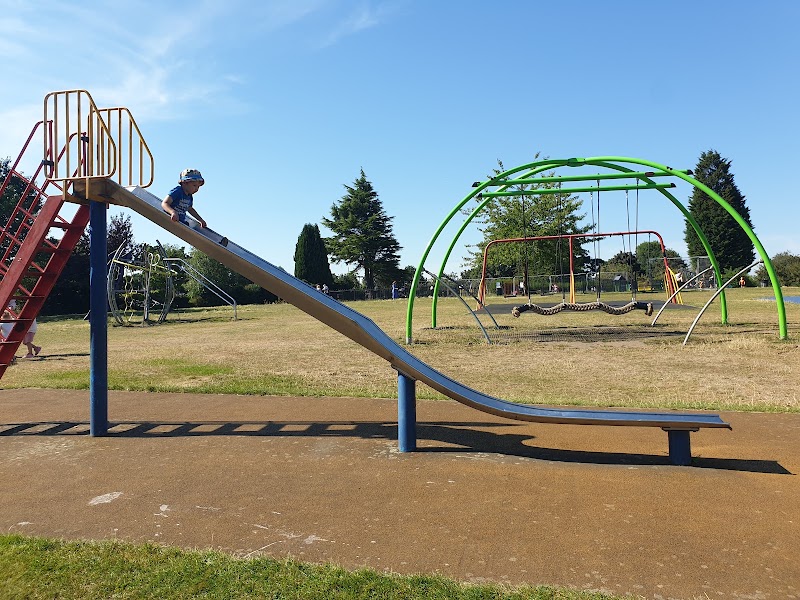
- Children’s play areas pitched at different age groups, from toddler equipment to bigger climbing structures.
- Hard tennis courts, the crown green bowling green, and open pitch space.
- A café close to the main lawns, and picnic space that spills out around it.
- Wide mown grass big enough to take a funfair, a carnival field or a bonfire without the rest of the park closing.
Things to do — and who it’s for
- Runners — a genuine Saturday-morning fixture rather than a token one, and the multi-lap course makes it forgiving for first-timers who want to know exactly what is left.
- Families with small children — playgrounds, an aviary and a café within a few minutes of each other, so a visit works even in a short weather window.
- Teenagers — the skatepark and the ball courts give the park a use that most ornamental gardens simply do not have.
- Older visitors and carers — the dementia-friendly garden was designed for people living with dementia and the people who bring them, with seating, enclosure and a sensory rather than a navigational logic.
- Bowls players — a green that has been in continuous use since 1936, with the informal club culture that comes with that.
- Local-history walkers — the gates, the former vicarage and the two-phase layout are all legible on the ground once you know what you are looking at.
Getting there & practical
The park is in Rothwell, a former mining town roughly five miles south-east of Leeds city centre and about the same distance north of Wakefield. There is no station in Rothwell itself; the nearest railhead is Woodlesford, on the line linking Leeds with Castleford and Knottingley, from which the walk or a short bus hop brings you into town. By bus, services 163 and 166 connect Rothwell with Leeds city centre and with the Castleford direction, and drop within a few minutes of the park. Entry is free and there is no ticketing of any kind; the grounds are open daily through the year, in practice from early morning until dusk, with the café and any staffed facilities keeping shorter hours. Allow an hour for a simple loop, two to three for a family visit with playground and café, and most of a morning if you are running and then eating.
When to visit
Spring is the park’s showiest season: the volunteer group plants bulbs in the autumn specifically for this, and the ornamental end comes up in waves before the bedding goes in. Summer is when the park does its civic work — brass bands play on warm afternoons, the carnival and fairs take over the big lawns, and the aviary and café draw a steady stream. Autumn brings colour to the mature trees along the slope and, in November, the annual community bonfire and fireworks, which is the single busiest night of the park’s year. Winter strips the park back to its bones and is arguably the best time to read its structure — the two-phase layout, the gates, the line of the beck through the bare dell — while the parkrun carries on regardless of weather.
Good to know
The park was originally called Rothwell Park and was built in two distinct campaigns. The western end came first, created with a grant from the West Yorkshire Joint District Miners Welfare Committee and opened in 1935 with tennis courts and a children’s play area; the bowling green followed in 1936. The eastern end was paid for by the Yorkshire Miners Union and opened in 1937, with commemorative gates installed to mark the occasion. That funding history matters: this was not a landowner’s gift or a Victorian corporation project but a facility bought with money raised from and for the coalfield workforce, at a time when Rothwell’s economy ran on coal. Springhead Park House, the former vicarage of 1871–72, was absorbed into the site rather than built for it. The most recent chapter is the dementia-friendly garden of 2017, developed around the aviary with support from Leeds City Council and the Rothwell and District Live at Home Scheme — a small project nationally, but one of the earliest examples in the country, and a continuation of the same welfare logic that created the park in the first place. Twenty-two hectares, run by Leeds City Council, with a volunteer group that meets quarterly for bulb planting, path clearance, beck clearance and litter picking.
Visitor tips
- Start at the top of the slope and walk downhill to the aviary and gardens — the reverse leaves you climbing back at the end, which is harder with a pushchair than the map suggests.
- If you are coming for the parkrun, arrive with time to walk one lap first; knowing where the course turns makes the two-and-a-half-lap format much easier to pace.
- Check the local events calendar before a November visit — the bonfire night transforms access and parking, and it is either exactly what you came for or exactly what you want to avoid.
Questions & answers
Is Springhead Park free to enter? Yes. It is a public park run by Leeds City Council, open daily and free of charge, with no ticketing at any entrance.
How big is it? Twenty-two hectares, which is roughly fifty-four acres — large enough for a proper walk, small enough that you will not get lost.
Who actually built the park? It was funded by the mining industry’s welfare bodies. The 1935 western end came from a West Yorkshire Joint District Miners Welfare Committee grant; the 1937 eastern end was paid for by the Yorkshire Miners Union.
What is the dementia-friendly garden? A garden opened in 2017 around the aviary, built with grants from Leeds City Council and the Rothwell and District Live at Home Scheme, and one of the first purpose-designed dementia-friendly gardens in Britain. It uses planting, seating and clear enclosure rather than instructions.
Is there a skatepark? Yes, a concrete one opened in 2016, kept at a distance from the ornamental gardens so the two uses do not conflict.
Is there a parkrun? Yes — Rothwell parkrun, free and timed over five kilometres, at nine o’clock every Saturday morning, covering about two and a half laps of the park.
What can I do with children here? Play areas for different ages, the aviary, the café and a lot of open grass. It works as a two-hour visit without any planning.
How do I get there without a car? Take a bus into Rothwell — services 163 and 166 run from Leeds city centre — or use Woodlesford station on the Leeds–Castleford–Knottingley line and continue into town from there.
Photos
Show 1 more photos
Visitor reviews
Reviews last updated: 2026-08-04 20:21:02
Data is refreshed monthly. Sources: leedsname.com and editorial picks based on reviews.
A well-kept local park with plenty of car parking spaces and a very popular café.
A well-cared-for and much-loved area for children and adults. Great for all ages and for dog walking, and the River Dolphin runs through i…
Great park with lots of free parking spaces and a café. I visited it for parkrun on Saturday morning at 9am. We also visited the birds that were in the park!
This is the perfect park if you want to get a bit of exercise or stretch your legs, as there's a great footpath and a woodland trail. There's also a recently refurbished tennis court and an outdoor gym.
There are the us…
As always, hats off to Leeds City Council for the exceptional upkeep of the parks and recreation areas.
Springhead is one of my favourite parks in the area with its beautiful views and varied planting.
Dog friendly, it…
Great park to visit with a dog, lots of open space for him to burn off energy. Lovely little bird sanctuary there too, which was a nice surprise. As we walked round, I was struck by the variety of different trees and shr…