

Leeds is a very beautiful city that is very popular among tourists. There are many interesting locations, architectural objects, parks and squares. In this article, we are going to tell you about Leeds’ Temple Newsam. This is a Tudor-Jacobean house that has been beautifully landscaped by Capability Brown. By the way, Temple Newsam is a Grade I listed building with a museum and a gallery. Learn more about the history of this beautiful location at leedsname.com.
History: What is known about Temple Newsam?
In 1086, the estate was called Neuhusam, meaning new houses. The building belonged to Ilbert de Lacy and his sons. In 1155, Henry de Lacy gave it to the Knights Templar, which built the Temple Newsam Preceptory on the site.
It should be noted that the knights effectively cultivated the estate and cared for about 1,100 animals living on it. However, the Templars didn’t rule this territory for a long time. In 1307, Edward II granted the manor to Sir Robert Holland, who owned it until 1323. Later, the manor passed into the possession of Countess Marie de St Pol, who held the estate for 50 years. In 1377, the building became the property of Philip Darcy. The owners were constantly changing, and in 1488, the manor was inherited by Thomas Darcy.
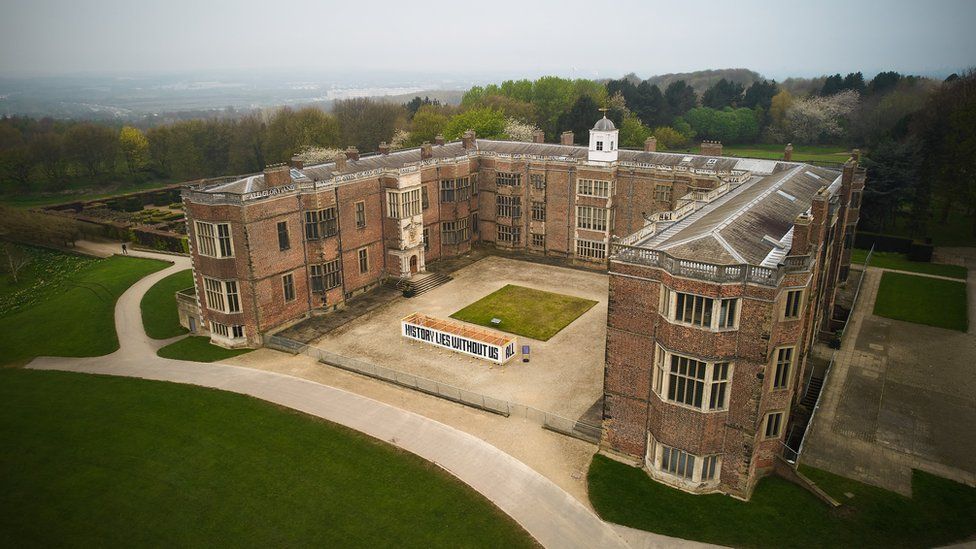
The Temple Newsam House was built between 1500 and 1520.
Unfortunately, in 1537, Lord Darcy was executed and the property was confiscated. Seven years later, Henry VIII gave the estate to his niece, Lady Margaret Douglas. And in 1565, Temple Newsam was seized by Queen Elizabeth I.
Further fate of the estate
In 1609, King James I gave the manor to his second cousin Ludovic Steward. Despite his titles and possessions (Ludovic was a favourite of the king), he mortgaged the manor in 1614 for £9,000. And already in 1622, the estate was sold to Sir Arthur Ingram for £12,000. During Arthur’s tenure, the estate was rebuilt.
Temple Newsam belonged to the Ingram family for several centuries. In 1712, William Etty designed a new approach to the house with a bridge and ponds. Subsequently, part of the house was reconstructed and new bedrooms, dressing rooms and a picture gallery were created. The park around the estate was landscaped in the 1760s.
In 1909, Leeds Corporation bought 250 hectares of the estate to build a sewage treatment plant. During the First World War, the southern wing of the building was turned into a hospital.
In 1922, the owner of Temple Newsam, Edward Wood, sold the estate and park to Leeds Corporation for a nominal sum. However, on the condition that the location must be preserved. A year later, the Temple and a golf course were opened to the public. Local residents enjoyed visiting the manor and the nearby park.
When the Second World War broke out, Temple Newsam was closed to visitors. Paintings and art objects were moved from the Leeds City Art Gallery. However, Temple Newsam was reopened in 1939.
It should be noted that Temple Newsam houses large collections of fine and decorative art pieces. The gallery consists of works of art brought from Europe, furniture sets commissioned by London furniture maker James Pascal, a collection of Chippendale works, etc.
Temple Newsam: The Modern Period
In the modern period, Temple Newsam is owned by Leeds City Council. The site is open to the public and tourists. The house underwent changes and was restored. There are also woodland and sports facilities for football, golf, running, cycling, horse riding and orienteering. In 2011, the place acquired an innovative playground for children with disabilities.
It should be noted that a farm, built in 1694, is still functioning. This is the largest active farm of rare breeds in Europe. However, in 2011, there were attempts to burn it and some animals were killed.
Visitors can also visit the luxurious gardens with six national plant collections.
However, this is not all we know about the legendary Temple Newsam. The estate records show the existence of coal pits in and around the park in the 17th century. A colliery in Halton village was leased to several individuals from 1660 until the 1790s. According to the agreement, the coal was to be delivered to Temple Newsam.
Deep coal mining in the estate stopped as early as 1968. However, its coal past is remembered even in the modern period. In 2019, the estate hosted a temporary exhibition about coal mining called Blot on the Landscape.
This location has hosted many events, such as Party in the Park and Opera in the Park (annual ticketed concerts), outdoor theatre performances, Steam Fairs, dog shows, various festivals, Cocoon in the Park, Slam Dunk festival and BUCS Cross Country championships.
It was the rich and interesting history of the creation and development of Temple Newsam. It had many owners and each of them has left a piece of their soul in this estate.
We hope that our article was informative and that you learned more about Leeds.
Have you visited Temple Newsam?