

Have you ever thought about how important electricity is in our lives? Just one hour of blackout can stop education, business, trade, food establishments, etc. In this article, we will tell you about the history of Leeds power plants. Learn more about it at leedsname.com.
Whitehall Road Power Station, the first in the city
The history of Whitehall Road Power Station began in the 1880s. At that time, Leeds City Council was experimenting with electric lighting. By the way, at first, the city leaders rejected the proposal to provide the population with electricity. For some reason, the council considered this decision to be speculation. However, the Yorkshire House-to-House Electricity Company Limited applied to generate and supply electricity in Leeds and managed to do it. Thus, Whitehall Road Power Station was created, and for the first time, electricity was delivered to consumers in May 1893.
Five years later, the Leeds Corporation decided to purchase the enterprise. It should be noted that in 1898, the generating capacity of the power plant was 1500 kW and the maximum load was 1010 kW. In that year, it provided electricity to 576 consumers.
In general, the power plant was rebuilt several times to meet the needs of consumers.
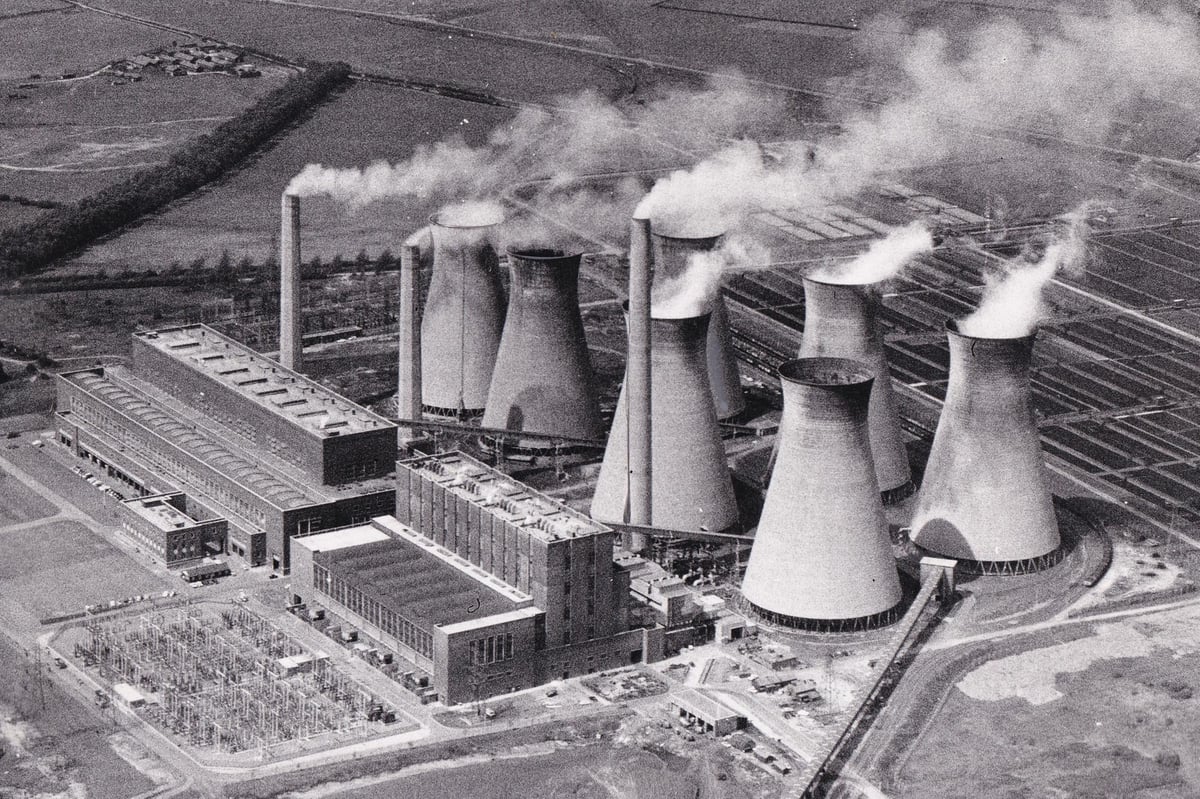
Kirkstall Power Station. History of creation
Kirkstall Power Station was opened in 1930 as a coal-fired station and served the city of Leeds. The power plant was located on the River Aire to the north-west of Leeds and had its own wharf for the delivery of coal via the Leeds and Liverpool Canal.
In 1926, the City of Leeds Corporation purchased the 42-ha Kirkstall site. The construction began a year later and the first electricity was produced in 1930.
It should be noted that the power plant was equipped with two British Thomson-Houston turbine generators. Then the expansion began. An additional turbo-generator was installed in 1935, and in 1948, the power plant increased its capacity to approximately 200 MW.
The power plant was coal-fired until 1964, but later, it was switched to oil. At that time, the boilers operated on pulverised fuel and fuel oil. Condensation and steam cooling were provided with the help of river water and concrete cooling towers.
In 1976, Kirkstall Power Station was closed, and over time, it was completely demolished. There were warehouses as well as golf and football fields on the station site. Today, the area is a part of Kirkstall Valley Nature Reserve.
How did electricity appear in Great Britain?
The first public electricity generator in Great Britain was installed in Godalming, Surrey, in 1881. The following year, the country adopted the law on electric lighting, which became the first state measure regarding the supply of electricity. Science was developing along with the legal system. In 1882, John Hopkinson, Professor of Electrical Engineering at King’s College, patented his three-wire direct current distribution system. In 1900, the country’s parliament passed several acts that granted power companies indefinite rights to supply electricity to authorised enterprises. Thus, interconnected power plants began to appear.
This is the history of power plants in Leeds and Great Britain in general. We hope that our article was interesting and that you learned more information about the energy system in Leeds.