

The incredibly beautiful Leeds attracts more and more tourists every year. In this city, you can enjoy gorgeous architecture as well as visit museums and galleries. And if you go outside the city, you can come across interesting natural locations. The subject of this article is St Aidan’s Nature Park, which is located between Leeds and Castleford in West Yorkshire. Learn more about the history of the park at leedsname.com.
History of creation. How did a coal mine turn into a park?
St Aidan’s Park covers an area of 355 hectares. Initially, it was a coal mining area. However, in 1988, the banks of the River Aire slid, resulting in a major flood. Water filled the mines in four days and formed a lake with an area of 100 hectares and about 70 metres deep.
Obviously, the mining operations were stopped. It was necessary to drain the area and change the route of the river. The works cost £20 million. Over time, coal mining was restored, but not for long. Ten years later, mining in this area was stopped and the place was turned into a wetland reserve.
In 2010, the land was transferred to St Aidan’s Trust, a charity run by Leeds City Council. Later, the land was leased for 99 years. And three years later, the Country Park was officially opened here.
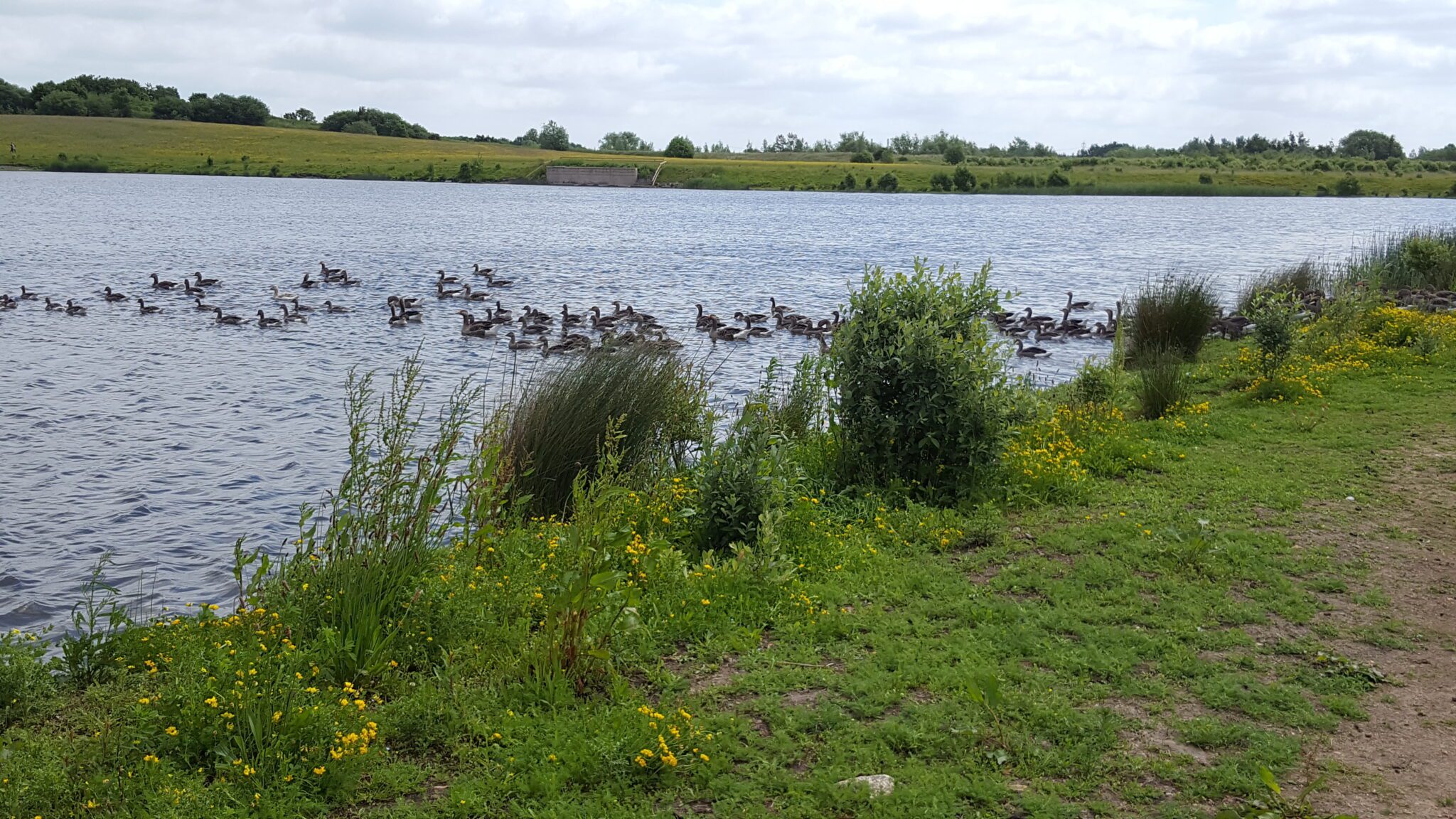
What surprises visitors to St Aidan’s?
St Aidan’s Park is adjacent to the River Aire. Therefore, you can get there via a network of paths. Approaching the park, you will see reeds, meadows and forests.
There, you can come across an owl, a harrier, a lark, a black-necked grebe, a common redshank, etc.
In the nature park, you can also see a unique dragline known as Oddball. Dragline is a single-bucket self-propelled loading and unloading machine of cyclic action, in which the bucket has a flexible connection with the boom and the rotary platform via ropes and blocks. In 1954, this machine was brought to Great Britain from the United States of America. In 1974, a dragline was used to extract coal at St Aidan’s.
It should be noted that its speed was 0.3 kilometres per hour. In 1999, the equipment was moved to the top of the hill, overlooking the reserve. In addition, it is the largest preserved walking dragline excavator in Western Europe. The visitors can see the machine on open days throughout the year.
The nature park is open every day except Christmas. The Visitor Centre is open from 9:30 a.m. to 5:00 p.m.
Benefits for mood and health
St Aidan’s is a place of strength for many residents of Leeds. Here, visitors have an opportunity to take a break from the city bustle, enjoy nature and get positive emotions from a walk in the fresh air. And did you know that such walks are extremely good for your health? The reasons are
- They are strengthening your immunity. Systematic walks in the fresh air have a positive effect on the body. Immunity increases because leukocytes are being enriched with oxygen. That is why adults and children who spend a lot of time in the fresh air are less likely to get sick. So, it’s better to take a walk in the territory of a natural park, instead of a dusty city.
- Weight loss. Walking helps to burn calories and, accordingly, to lose weight. This natural park covers an area of 355 hectares, so there is a place to walk, benefiting the body and getting emotional satisfaction.
- Walking is not only a physical activity but also an emotional reset.
This is the history of St Aidan’s Nature Park. Have you ever visited it?