

Leeds is a vibrant and green city, beloved by tourists for its architecture, natural landmarks, and breathtaking landscapes. Among its many attractions once stood the Headingley Zoological and Botanical Gardens, later renamed the Royal Gardens of Leeds. This article on leedsname.com delves into the history, rise, and decline of this unique space.
The Creation of the Gardens: A Need for Green Spaces
Following England’s industrialization, Leeds faced a significant shortage of green spaces as its population rapidly grew. By 1833, concerns arose that the lack of leisure areas might lead to increased alcoholism and gambling among residents. Parliament convened a Special Committee on Public Walks to evaluate the availability of parks and recreational areas in densely populated cities. At the time, Leeds, with a population of 72,000, had only three public recreational spaces.
Despite the Committee’s recommendations for a promenade, local authorities delayed action. In 1836, Dr. Disney Thorpe proposed creating a leisure park to encourage outdoor activities. His vision led to a public meeting in May 1837 to discuss founding a Botanical Garden.
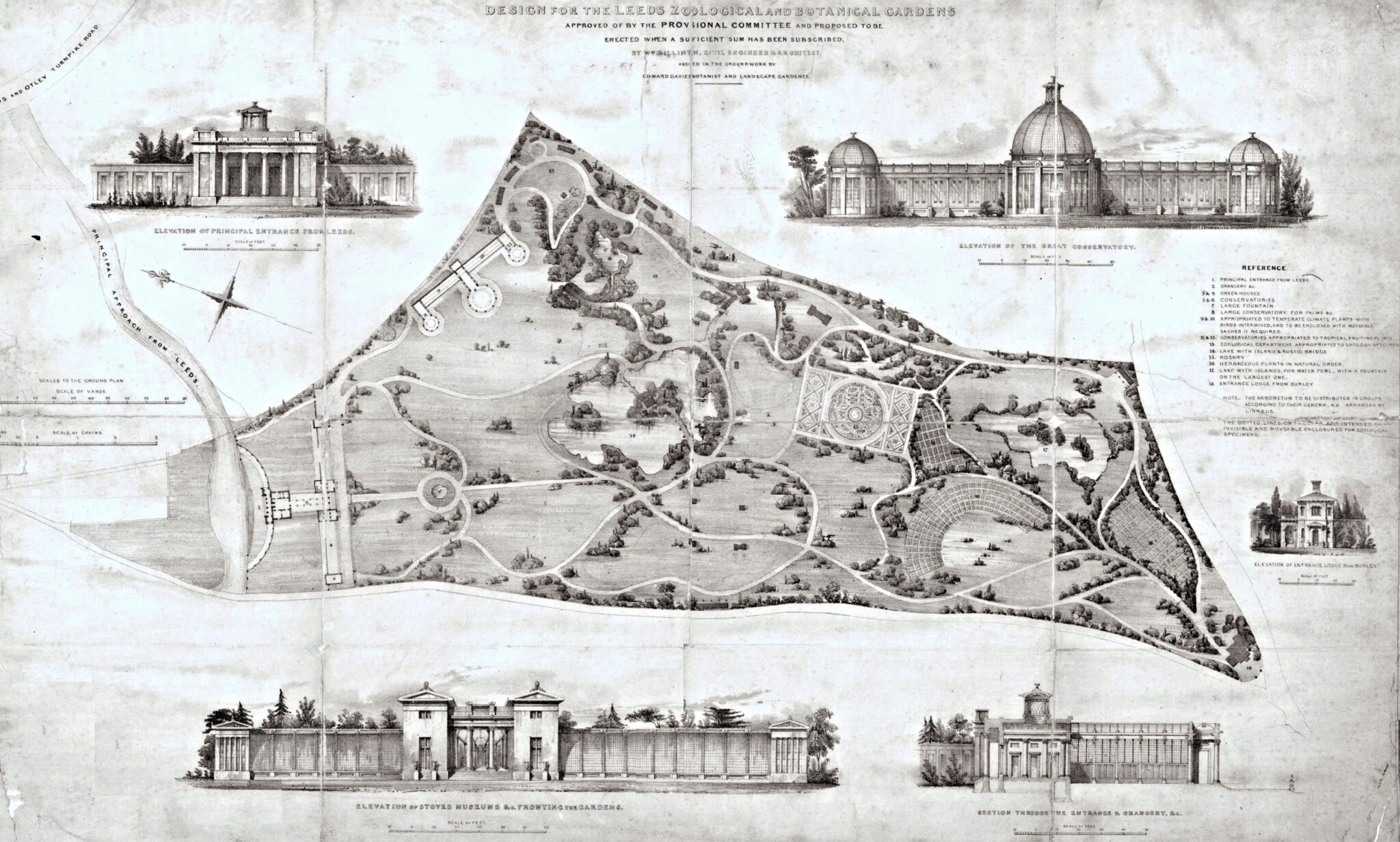
Wealthy Leeds residents supported the initiative by purchasing shares, raising £5,000 to acquire four fields in Headingley, then a rural village separate from Leeds. In September 1837, a design competition was held, and the winning proposal came from William Billinton, an architect and landscape gardener.
Despite fundraising efforts totaling £11,000, the project faced financial challenges. Nevertheless, the gardens officially opened on July 8, 1840, marked by festivities featuring flags, orchestras, and exotic birds.
A Rapid Decline
Admission fees and the gardens’ distance from the city deterred visitors, compounded by the decision to close the gardens on Sundays—the only day off for most workers. Sunday openings were eventually permitted, but it was too late to reverse the declining visitor numbers.
The gardens managed to generate some revenue through events like flower shows, archery contests, and gala concerts, including collaborations with the Leeds Horticultural and Florists Society. In 1843, the gardens introduced their first significant animal exhibit, a brown bear housed in a pit surrounded by towers. Other animals included a raccoon, alligator, guinea pig, owl, peacock, and parrots.
Unfortunately, financial difficulties persisted, and the gardens closed in 1848. The land and assets were sold multiple times until Thomas Clapham took over management. Renamed the Royal Gardens, Clapham reduced entry fees, opened the site for private events, and extended Sunday hours. He even convinced a railway company to establish a station near the park’s southern entrance. Despite these efforts, the gardens closed permanently in 1858, and all assets, including animals, were sold.
The Headingley Zoological and Botanical Gardens were an ambitious project that ultimately struggled to find lasting success. Today, no remnants of the gardens remain. Nevertheless, their story offers insight into Leeds’ history and the city’s evolving relationship with green spaces.
We hope this article provided you with valuable insights into Leeds’ rich history. What are your thoughts on the gardens and their legacy? Share your views in the comments on social media!