

Park · Leeds · ⭐ 9.5/10 · 15066 reviews · updated: 2026-08-04 20:20:58
Address: Mansion Ln, Roundhay, Leeds LS8 2HH, United Kingdom
Roundhay Park — the Victorian estate that became Leeds’s front garden
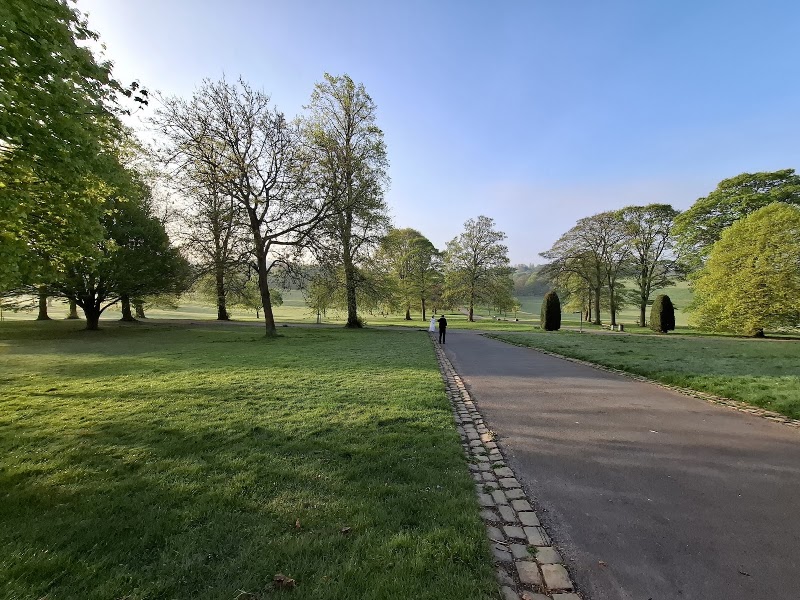
Spread over more than 700 acres of parkland, lake, woodland and formal garden on the north-eastern edge of the city, Roundhay Park is one of the largest urban parks in Europe and comfortably the busiest green space in Leeds, drawing close to a million visits a year. It is less a park than a whole landscape held in one boundary: two lakes of utterly different character, a Greek Revival mansion looking down a wooded slope, walled gardens, glasshouses full of tropical plants, a ravine cut by glacial meltwater, and a natural amphitheatre that has held crowds of well over a hundred thousand. Laid out for private pleasure in the early nineteenth century and thrown open to the public in 1872, it has been carrying the city’s weekends ever since.
Highlights
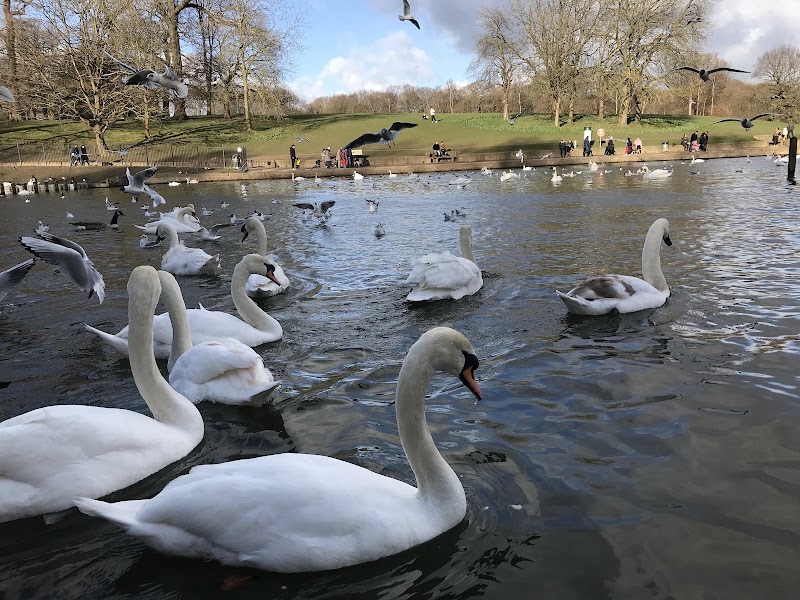
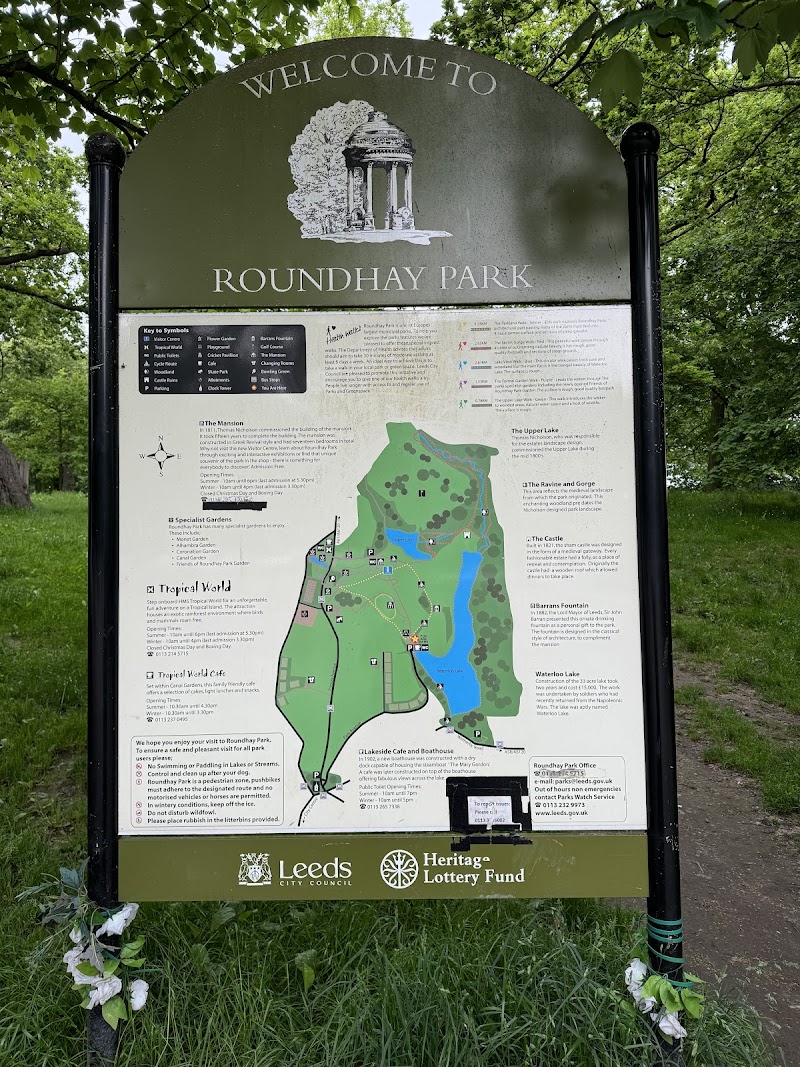
- Waterloo Lake — 33 acres of water averaging around 60 feet deep, excavated from an old quarry by soldiers returning from the Napoleonic Wars and named for the battle they had just fought; it is the dark, cold heart of the park and takes a good half-hour to walk around.
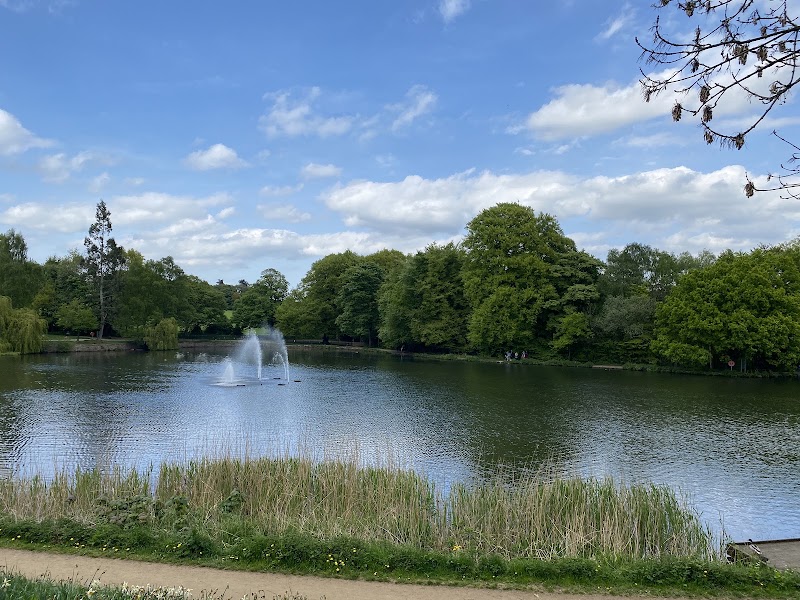
- The Upper Lake and the ravine — barely 5 acres and only three or four feet deep, with an island, fountains and a waterfall that tumbles through a wooded ravine down to Waterloo Lake; native white-clawed crayfish, once abundant here, have been reintroduced.
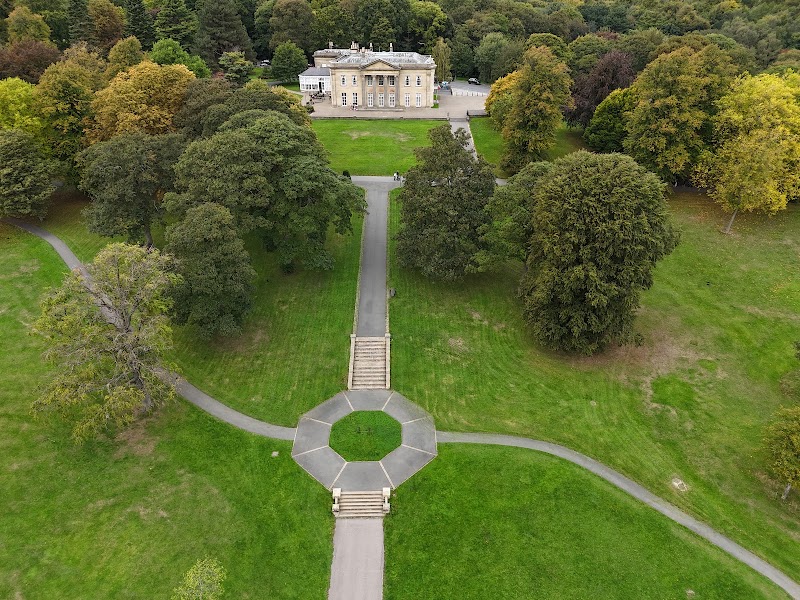
- The Mansion — a Greek Revival house built between 1811 and 1826 for Thomas Nicholson, with thirteen-foot ceilings on the principal floor, seventeen bedrooms above and stabling once kept for seventeen horses; after an £8 million restoration its rear wings reopened in November 2007 as an education and visitor centre.
- Tropical World — glasshouses holding the largest collection of tropical plants in Britain after Kew, with a butterfly house, a nocturnal house of bats, meerkats, free-flying birds and an Amazon-themed zone with piranhas added in a 2015 refurbishment.
- Canal Gardens — a grassed formal canal 350 feet long dating from 1833, a walled kitchen garden of about 1816 now given over to roses, and a three-arch shelter restored in 2020.
- The Arena and Hill 60 — a natural bowl that Thomas Nicholson had originally intended as a third lake, converted in 1894 into a sports arena with a cycle track; the mound overlooking it is named for Hill 60 near Ypres, where Leeds soldiers were killed in the spring of 1915.
- Gardens of the World — the Monet Garden, planted in 1999 after Claude Monet’s garden at Giverny, leading through to the Alhambra Garden, whose long pond and horizontal fountain jets are borrowed from the Generalife in Granada.
What you’ll find
Roundhay operates on several scales at once. You can spend twenty minutes among the roses or a full day working your way from the walled gardens to the far side of the deep lake without repeating a path. Because the estate was assembled from farmland, quarries and disused coal workings, the ground itself is unusually varied — flat playing fields at one end, sixty-foot water and steep wooded banks at the other.
- Open parkland and playing fields, including the broad expanse of Soldiers’ Field, where troops assembled during the First World War and where the aviation pioneer Robert Blackburn made test flights as early as 1909.
- Mature woodland and the Gorge — a V-shaped glacial meltwater valley on the park’s three-mile geology trail, cutting through shales laid down roughly 300 million years ago, when this part of the world lay close to the equator.
- Four prize-winning Chelsea Flower Show gardens rebuilt here between 2008 and 2011, two of them gold medallists; the 2010 entry, modelled on a lock on the Leeds and Liverpool Canal, made Leeds the first local authority to take gold in the large outdoor category, and the 2011 garden features a Yorkshire mill with a three-metre working water wheel.
- Barran’s Fountain, a Grade II listed classical rotunda of 1882 presented by John Barran and carved by John Wormald Appleyard, its water outlets long since removed.
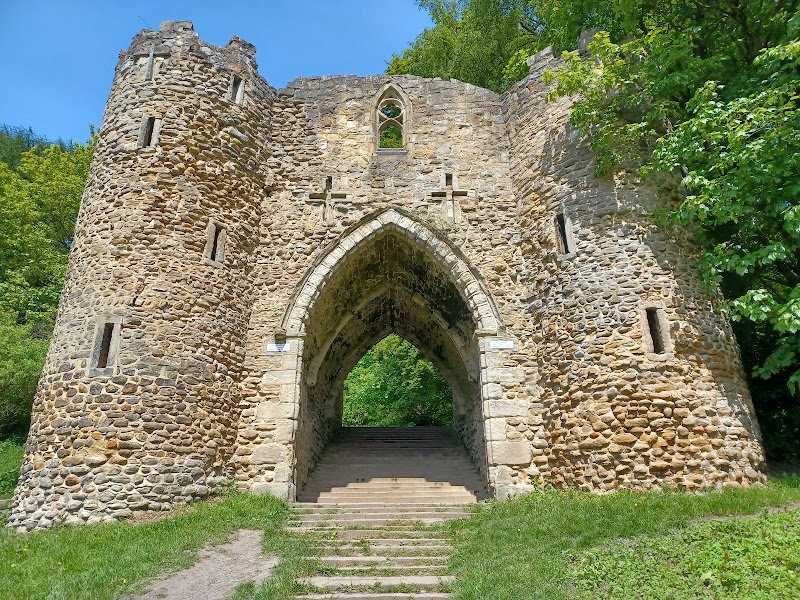
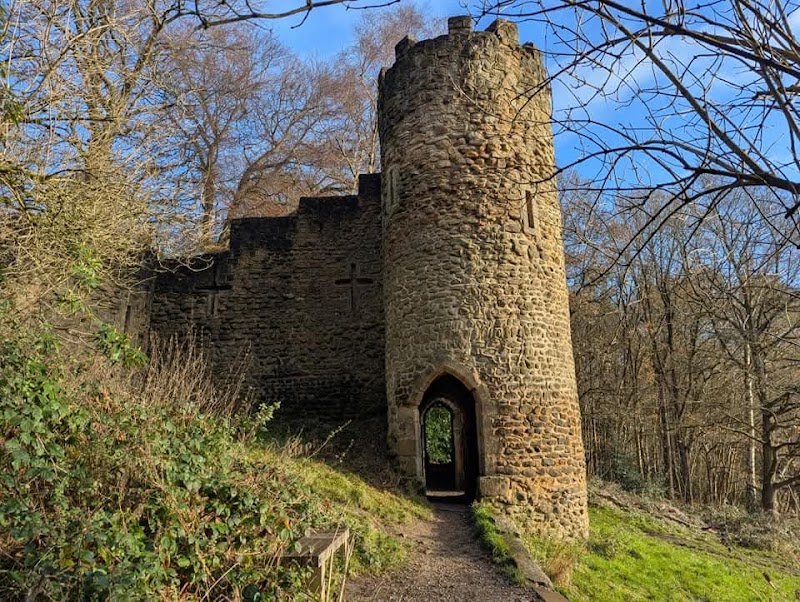
- The Castle — a mock castle-gate folly put up in 1811 by the local master builder George Nettleton, which served in its time as summerhouse, sewing room and party venue.
- Cafés and kiosks, playgrounds, accessible and sensory planting with braille labelling, and a boathouse used by Leeds Rowing Club.
Things to do — and who it’s for
- Families with small children — the Canal Gardens end concentrates everything useful within a few hundred metres: playground, café, level paths, ducks on the shallow lake and Tropical World across the way when the weather turns.
- Runners and fitness groups — a free timed 5km parkrun sets off every Saturday morning at nine, and the circuit of the deep lake is the standard local benchmark loop; outdoor training groups and the Roundhay Runners club use the park all year.
- Rowers and lakeside loiterers — Leeds Rowing Club keeps one of the two boathouses on Waterloo Lake, and four-oared racing under Amateur Rowing Association rules has been held here since the 1890s.
- History and geology walkers — the geology trail, the folly, the fountain and the Mansion give a self-guided route that reads the park backwards from Victorian civic pride to Carboniferous mudflats.
- Dog walkers — the sheer acreage means the park absorbs crowds; the woodland paths above the ravine stay quiet even on a warm Sunday.
- Sledgers and winter walkers — Hill 60 is the city’s default sledging slope the moment snow settles, and the low winter sun across the deep lake is the best light of the year.
Getting there & practical
The park sits on the north-eastern edge of Leeds, with the Roundhay suburb to the west, Oakwood to the south and the outer ring road running along its northern boundary — roughly three miles out from the centre. Frequent city buses on routes 2, 12 and 13 run from the city centre and take about fifteen to twenty minutes, with stops beside the gardens; the 12 also links the park directly with Middleton in south Leeds. The nearest mainline railway station is Leeds City, from which the same buses complete the journey. There are five car parks inside the park and parking is free; one of them is still signposted “Lido” after the open-air pool that stood below the dam. Entry to the park itself is free and it is open all year round, while Tropical World is a separately ticketed attraction open daily from 10am to 6pm, closed only on Christmas Day, Boxing Day and New Year’s Day. Allow two hours for a lake circuit and gardens, or the better part of a day if you add the glasshouses and the geology trail.
When to visit
Spring is the Canal Gardens’ season — bulbs and blossom in the walled garden, and the woodland floor above the ravine greening up before the canopy closes. Summer belongs to the Arena, which doubles as a cricket pitch through the warm months, and to the long light evenings when the whole city seems to be circling the lake; this is also when the formal beds and the Chelsea gardens are at full strength. Autumn is the best time for the Gorge and the woodland walks, when the beeches turn and the meltwater valley fills with leaf colour and mist off the water. Winter strips the park back to its bones and shows the Victorian design most clearly: bare trees, the Mansion visible from across the water, and Hill 60 covered in sledges the moment snow falls. Early mornings and the hour before dusk are quietest in every season.
Good to know
The land has been a park, in one sense or another, for the best part of a thousand years. After the Harrying of the North, William the Conqueror granted these estates to Ilbert de Lacy in 1069–70, and by the thirteenth century the de Lacys were using the ground as a hunting park. Ownership passed through John of Gaunt to his son Henry IV; in the sixteenth century Henry VIII granted the park to Thomas Darcy, and in the eighteenth it came to the Stourton barons. In 1803 Charles Stourton sold the estate to Thomas Nicholson and Samuel Elam; Nicholson took the northern half and set about turning worked-out quarries and coal pits into landscape, creating the Upper Lake and Waterloo Lake over roughly a decade at a cost of some £15,000 and giving work to demobilised soldiers in the process. The Mansion followed between 1811 and 1826.
The public chapter began in 1871, when the estate was put up for sale. The artist John Atkinson Grimshaw was commissioned to paint three views of it to help lobby Parliament, and the Mayor of Leeds, John Barran, pressed the town to buy. Because the council’s own spending limit was £40,000, Barran and a group of associates bought the property privately for £139,000 and were reimbursed once Parliamentary approval came through in 1872. George Corson won the competition to lay out the new public park, and Prince Arthur formally opened it in 1872 before a crowd estimated at 100,000. In 1891 the park gained a second claim to fame when Britain’s first public electric tramway using overhead trolley power was inaugurated between Oakwood, at the park gates, and Sheepscar. An open-air lido operated below the dam from 1907 and was hugely popular in the 1950s before being filled in during the 1980s. In 1933 a record 80,000 watched England lose an international rugby league sevens tournament to Australia here.
The Arena’s modern reputation rests on music. The Rolling Stones drew more than 120,000 in July 1982; Bruce Springsteen played to 80,000 in 1985; Madonna to 73,000 in 1987; Michael Jackson to around 90,000 in both 1988 and 1992; U2 to over 120,000 in 1993; the Love Parade brought an estimated 300,000 in July 2000; Robbie Williams played to 138,000 across two nights in 2006; and Ed Sheeran to about 150,000 across two nights in August 2019. The glasshouse complex, whose main building is still called Coronation House after the structure first raised in the coronation year of 1911, was rebuilt in 1939, modernised in 1983 as Tropical World, and formally renamed the Arnold and Marjorie Ziff Tropical World in July 2008 in recognition of Arnold Ziff’s founding donation. The park is Grade II listed on the national register of historic parks and gardens.
Visitor tips
- Park at the gardens end if you have children and at the lake end if you want the woods — the walk between the two takes about twenty minutes and there is no need to move the car.
- Waterloo Lake is genuinely deep and cold; swimming is not permitted, and a memorial stone by the lakeside path records why the rule is taken seriously.
- Tropical World is at its calmest early on a weekday morning; on wet weekends and school holidays queues form quickly, so it works better as a first stop than a last resort.
Questions & answers
Is Roundhay Park free to enter? Yes. The parkland, both lakes, the woodland, Canal Gardens and the Gardens of the World are all free and open all year, and the five car parks are free as well. Tropical World is a separate ticketed attraction.
How big is it, and can I walk it all in one visit? The park covers more than 700 acres. A circuit of Waterloo Lake takes most people around forty-five minutes to an hour; seeing the lakes, the gardens and the geology trail properly is a half-day at minimum.
What exactly is Tropical World? A complex of climate-controlled glasshouses representing different world habitats, holding the largest tropical plant collection in Britain after Kew, plus a butterfly house, aquariums, a nocturnal bat house, meerkats and free-ranging birds and reptiles. It opens daily from 10am to 6pm.
Can you swim or hire a boat on the lakes? No. The lido that once stood below the dam closed and was filled in during the 1980s, and the pleasure boats that ran on Waterloo Lake until 1923 are long gone. Rowing on the lake today is club activity rather than casual hire.
Is the park suitable for wheelchairs and pushchairs? The Canal Gardens, the Gardens of the World and the main routes near the Mansion are level and surfaced, and the show gardens were built with wheelchair access and sensory planting with braille labelling. The ravine and the steeper woodland paths around the deep lake are a different matter.
Are dogs allowed? Yes, across the open parkland and woodland, under control. Dogs are not admitted to the glasshouses.
Why is one of the car parks called the Lido? Because an open-air swimming pool operated on that spot below the Waterloo Lake dam from 1907 until the 1980s. The pool has gone but the name survives on the signs.
What is the best single viewpoint? The slope below the Mansion, looking down the water — it is the view the house was built for, and the one Grimshaw painted to persuade Parliament that Leeds should own the place.
Photos
Show 1 more photos
Visitor reviews
Reviews last updated: 2026-08-04 20:20:58
Data is refreshed monthly. Sources: leedsname.com and editorial picks based on reviews.
This is just a MASSIVE and beautiful area for one and all. Was there for the Roundhay Festival (working!). Had a great time… the food prices, honestly, are just scandalous, so I bought my own. Had a great time, will de…
What an absolutely amazing and beautiful place this is. There are so many walks here, whether across fields or through woods, and stunning stretches of water. On the day of our trip there was a fair on, which was an adde…
Great park! Came here to spend a nice day with the family and had a wonderful time. There were some issues with parking because of the Easter holidays, apart from that everything else was perfect. The lake is beautiful,…
A huge park with a variety of criss-crossing paths and numerous parking spaces. We parked in the Lakeside car park next to the café. We decided to do a circular walk around Waterloo Lake. Nice level firm footpaths, suita…
This place has great views and lots of different places to walk, as well as areas for picnics or just for relaxing.
I do wish dog owners would keep dogs that they "have fully under control" on leads, especially during t…