

Park · Leeds · ⭐ 9.1/10 · 1780 reviews · updated: 2026-08-04 20:21:01
Address: Park Square E, Leeds LS1 2NP, United Kingdom
Park Square — a Georgian garden square, not a park, and all the better for it
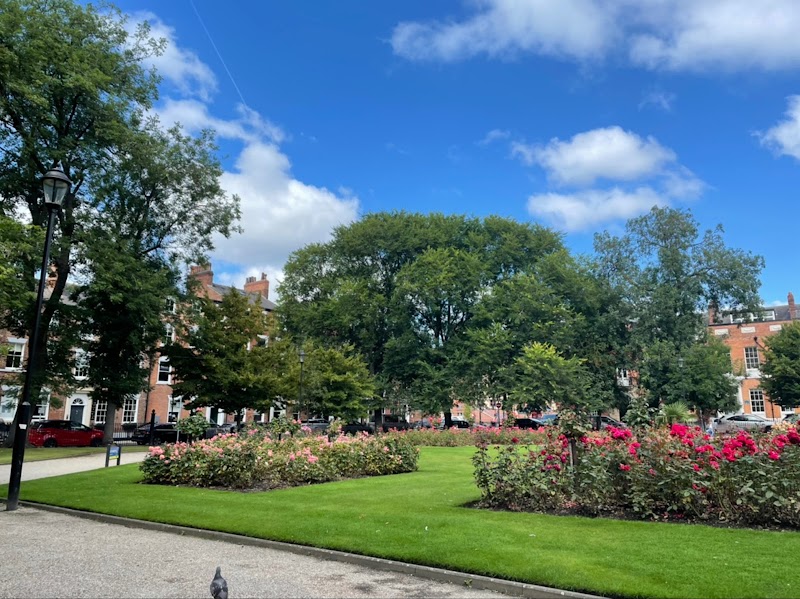
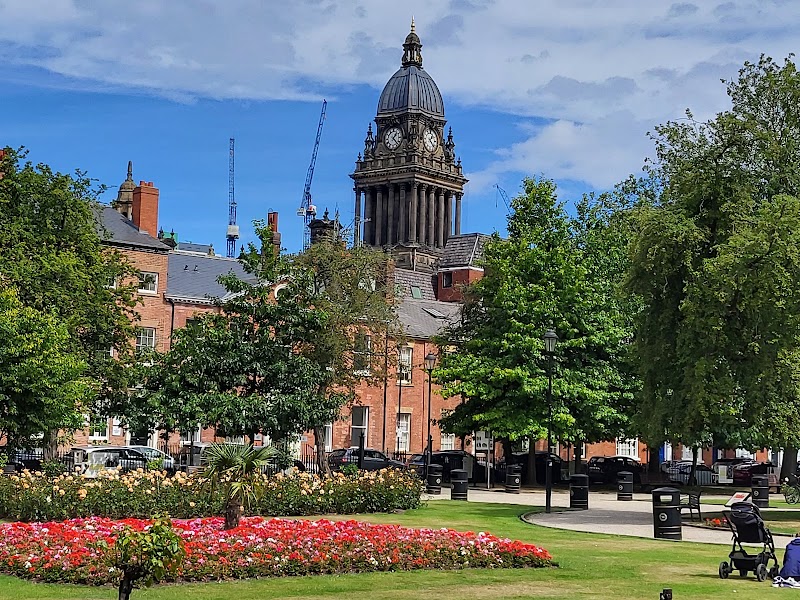
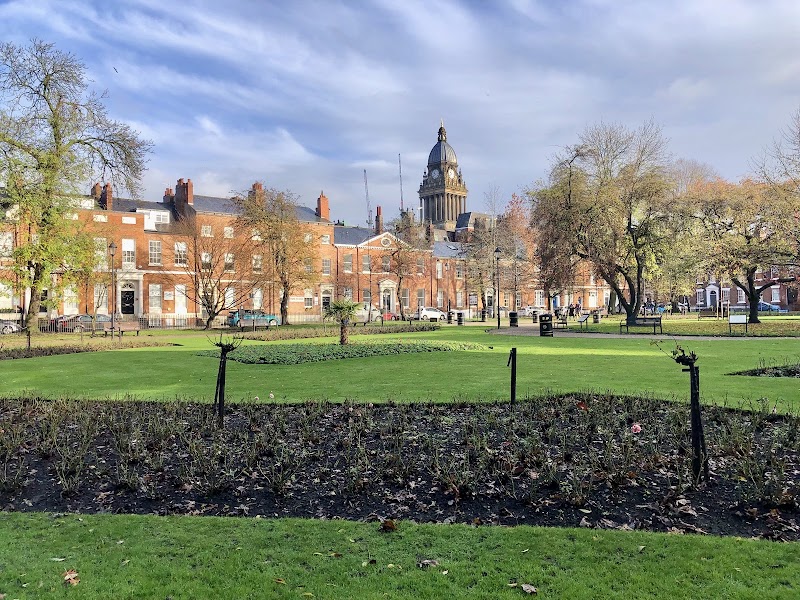
It is worth saying plainly at the start: Park Square is not a park in the way the rest of this list is. It is a Georgian garden square in the middle of Leeds — a single rectangle of lawn and mature trees, enclosed by iron railings, ringed on all four sides by listed townhouses of the 1790s and early 1800s. You can cross it in ninety seconds. What it offers is not distance or wildness but something the big parks cannot give you: a complete late-Georgian streetscape still standing whole, with a working green floor in the middle of it, five minutes from the Town Hall. Laid out from 1788 and finished in its first form by 1810, it was built as a private residents’ garden for merchants, surgeons, clergy and lawyers escaping the smoke. The lawyers are still here. The garden is now everybody’s.
Highlights
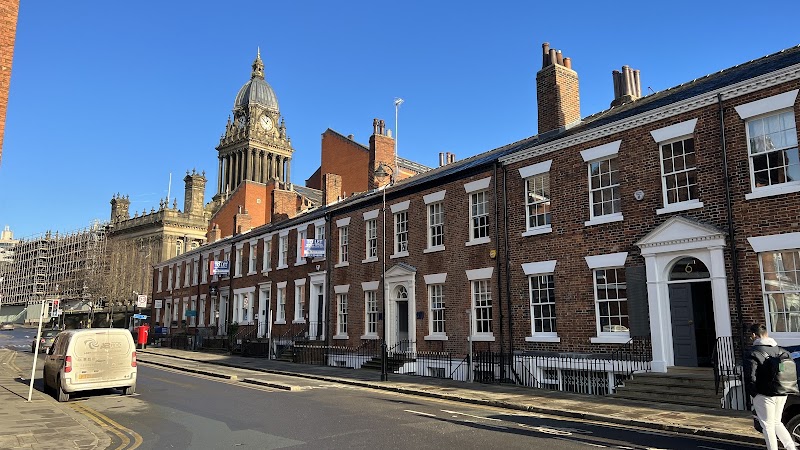
- The Georgian frontages — brick townhouses raised between the 1790s and about 1815, listed and largely intact on all four sides, giving Leeds its most complete surviving piece of late-Georgian town planning.
- St Paul’s House — Thomas Ambler’s astonishing Hispano-Moorish pile of 1878, built for the clothier John Barran in red and pink brick with terracotta, crowned by a pierced parapet of cinquefoil openings and five corner minarets modelled on the Alhambra. It is Grade II* listed and was among the first purpose-designed clothing factories anywhere.
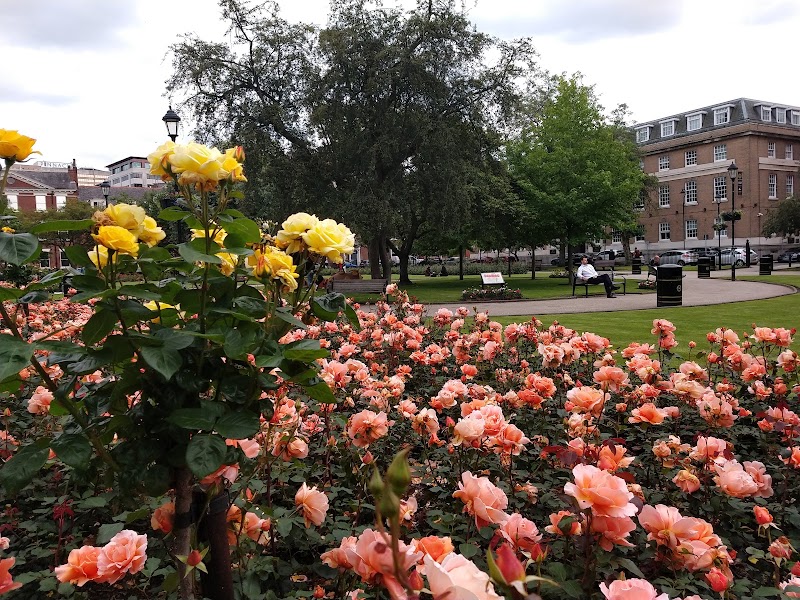
- The central garden — lawn, paths and mature trees inside iron railings, laid out originally for the exclusive use of the residents and now open to anyone who wants to sit down.
- The empty plinth — Alfred Drury’s bronze Circe stood at the centre of the garden from 1894, goblet raised and wand pointing at the swine at her feet; corroded and stripped of her wand, wreath and cup, she was taken indoors to the city’s collection in 2008 and never replaced.
- Rivers House — a Neo-Georgian block of 1938 built as offices for the Water Board on the site of the demolished parish church, and a clean lesson in how the twentieth century chose to fill a Georgian gap; it is now flats.
- The ghost of St Paul’s Church — the church that gave the square its focus and its residents their private pews stood from 1793 until it was pulled down in 1906, and its footprint still shapes the south side.
What you’ll find
Park Square is small, formal and quiet, and its interest is concentrated rather than spread out. Everything is visible from a bench, which means an hour here delivers more architectural detail per minute than a whole afternoon in a landscape park.
- An open lawn with surfaced paths and mature trees, giving genuine shade across the middle of the day and blossom in spring — a working green lung inside a dense commercial district.
- Four sides of listed Georgian brickwork, including a run on the eastern side dating from roughly 1806 to 1815 and restored around 1990, and a Grade II listed group on the western side.
- One of the most eccentric Victorian buildings in the north of England, standing directly against the Georgian grain, in the form of St Paul’s House.
- Working chambers and offices behind almost every door — the square is the core of Leeds’s legal quarter, occupied by barristers and solicitors rather than residents.
- Vicarage Chambers on the eastern side, built on the site of the old vicarage, and the Neo-Georgian Rivers House on the south, now private flats.
- Benches, shade and an unusually civilised lunchtime crowd; there are no playgrounds, no sports pitches, no café inside the railings and no facilities beyond a place to sit.
Things to do — and who it’s for
- Architecture watchers — nowhere else in Leeds can you stand on one spot and read the Georgian town, the Victorian clothing boom and interwar civic taste in a single turn of the head.
- Office workers and shoppers — this is the best lunchtime sit-down in central Leeds, close enough to the shopping streets to be practical and far enough off them to be calm.
- Social historians — the square was the setting for the Leeds dripping riot of 1865, one of the sharpest class confrontations in the city’s history, and its houses were home to figures who changed medicine and brewing alike.
- Photographers — the symmetry of the frontages, the minarets rising over Georgian roofs and the low sun down the long axis make this a far richer subject than its size suggests.
- Visitors with an hour to spare — it sits within easy walking distance of the Town Hall, the art gallery and the station, so it slots into a city-centre walk without any detour.
- Anyone who needs quiet — the railings, the trees and the absence of through traffic across the middle make this the most reliably peaceful patch of grass in the city core.
Getting there & practical
Park Square sits in the west end of Leeds city centre, in the professional and legal quarter between the civic buildings and the western fringe of the commercial core. Leeds City station is roughly a ten-minute walk, which makes this one of the easiest green spaces in the whole city to reach by rail from anywhere in West Yorkshire; the main city bus stops and the central bus station are a similar distance on foot, and effectively every city and regional service passes within a few minutes’ walk. There is no car park and no reason to drive — the surrounding streets are metered, permit-controlled commercial parking, and multi-storey car parks nearby serve the shopping district. Access to the garden is free with no admission of any kind and no ticket for anything; being a small enclosed city-centre garden, it functions as a daylight-hours space in practice. Half an hour is enough to walk the square and look properly at the buildings; the neighbouring civic attractions, including the city art gallery where the Circe bronze now lives, are separate venues with their own opening hours.
When to visit
Spring is the square’s prettiest moment, with blossom against the brick and the lawn recovering before the trees are fully out — and it is the season when the Georgian proportions read most clearly, because the canopy has not yet closed over them. Summer is when the square earns its keep, as the mature trees throw enough shade to make the middle of the day comfortable and the surrounding chambers empty onto the grass at lunchtime; it is busy between roughly noon and two on any warm weekday, and empty an hour either side. Autumn gives the best light of the year down the long axis of the square, with the terracotta of St Paul’s House glowing against turning leaves. Winter, counterintuitively, is the connoisseur’s season: with the trees bare you can finally see all four sides at once, the way the square was designed to be seen, and the minarets stand clear over the Georgian roofline. Weekends are quiet all year, because almost nobody lives here any more.
Good to know
The square was speculative property development of the most fashionable kind. The land belonged to the Wilson family, who from 1788 leased plots to builders and architects to create a high-class residential estate — the Park Estate, Leeds’s own West End — aimed at merchants, clergy, lawyers and surgeons who wanted distance from the industry and the river without losing touch with the commercial centre. The developers copied Bath, Bloomsbury and Bristol not only in layout but in vocabulary: the deliberate use of “Square”, “Place”, “Row” and “Parade” instead of “street” was a status signal, and it worked. The scheme reached its finished first form around 1810, with a railed private garden of lawns, paths and flower beds in the centre, and a church at the south end — St Paul’s, built in 1793 — in which residents held exclusive rights to pews and burial. The church came down in 1906, and in 1938 Rivers House was raised on part of the site in a polite Neo-Georgian idiom as offices for the Water Board; it now contains private flats.
The single most surprising thing on the square arrived in 1878 and marks the exact moment the neighbourhood stopped being residential. John Barran, a clothier who had transformed ready-to-wear manufacturing after watching a bandsaw cut wood veneer in 1858 and realising the same machine could cut stacked cloth, commissioned Thomas Ambler to build him a warehouse and cloth-cutting works. What Ambler produced was a Hispano-Moorish fantasy in red and pink brick and terracotta, with a pierced parapet of cinquefoil openings and five slender corner minarets drawn straight from the Alhambra — an Alhambra dropped into a Georgian square in industrial Yorkshire. It is now Grade II* listed and counts as one of the earliest purpose-designed clothing factories anywhere. It was converted to offices in the 1970s, and the parapet and minarets you see today are fibreglass reproductions of the decayed terracotta originals. Barran himself became Mayor of Leeds and served as the city’s Liberal MP from 1876 to 1885 — and it was the same John Barran who led the syndicate that bought Roundhay Park for the public in 1871.
The houses have carried a remarkable roll of residents. Joshua Tetley, who founded the brewery, settled on the square in 1808. Clifford Allbutt, who invented the short clinical thermometer that made bedside temperature-taking practical, lived here. Berkeley Moynihan, the pioneering abdominal surgeon, was another resident. Edith Pechey, among the very first women in Britain to qualify in medicine and the first to practise in Leeds, had her rooms here. And on 22 February 1865 the square was the epicentre of the Leeds dripping riot: Eliza Stafford, cook to the surgeon and magistrate Henry Chorley, had been jailed for taking two pounds of dripping she insisted was a perquisite of her job. The verdict outraged working Leeds, more than twelve thousand people came onto the streets, the magistrate’s house was besieged, five people were arrested for riotous conduct and a Leeds potter, George Hodgson, was trampled in the crush and later died in hospital. In the middle of all this the garden kept its statue: Alfred Drury’s bronze Circe, installed in 1894 on a brick plinth, goblet upturned, wand levelled at the swine at her feet. She stood there for over a century before being removed in 2008 — green with verdigris and missing wand, wreath and cup — for conservation indoors. A replacement was discussed and quietly abandoned, and the plinth’s absence is now part of the square’s story.
Visitor tips
- Walk the full perimeter before you sit down. The square only makes sense from outside the railings, where you can see the four elevations as a single designed composition.
- Avoid the lunch hour on a warm weekday if you want the grass to yourself — the chambers empty out around midday and refill by two.
- Look up on the corner where St Paul’s House stands: the minarets and the pierced parapet are the point of the building, and from directly beneath them you miss the whole silhouette.
Questions & answers
Is Park Square actually a park? No, and it is fairer to call it what it is: a Georgian garden square. It is a single rectangle of railed lawn and trees at the centre of a block of listed townhouses, walkable end to end in a minute or two. There are no facilities, no playgrounds and no woodland — the appeal is the architecture and the calm.
When was it built? Laid out from 1788 and completed in its original form by 1810, as part of the Wilson family’s Park Estate, the fashionable West End development of Georgian Leeds.
Is it free and open to the public? Yes. There is no admission of any kind. It began as a private garden for residents only and is now open to everyone; as a small enclosed city-centre garden it is best treated as a daylight-hours space.
What is the extraordinary Moorish building on the corner? St Paul’s House, built in 1878 by Thomas Ambler for the clothier John Barran as a warehouse and cloth-cutting works, in a Hispano-Moorish style with five corner minarets inspired by the Alhambra. It is Grade II* listed and was one of the earliest purpose-designed clothing factories; the minarets today are fibreglass copies of the terracotta originals.
Why is there an empty plinth in the garden? Because Alfred Drury’s bronze Circe, put there in 1894, was removed in 2008 in poor condition — corroded and missing her wand, wreath and cup — and taken indoors into the city’s collection. A replacement bronze was discussed after 2007 and never installed.
What happened to the church? St Paul’s Church, built in 1793 and giving residents private pew and burial rights, was demolished in 1906. Part of its site was built over in 1938 by Rivers House, a Neo-Georgian block put up as Water Board offices and now converted to flats.
Who lives here now? Almost nobody. The square turned commercial from the late nineteenth century onwards and is now the heart of the Leeds legal quarter, occupied by barristers’ chambers and solicitors, with a small number of flats in the twentieth-century block.
How do I get there? On foot. Leeds City station is about ten minutes away, the central bus station a similar walk, and the square sits within the city-centre core beside the civic buildings. There is no car park and the surrounding parking is metered and permit-controlled.
What is the Leeds dripping riot? A serious disturbance on 22 February 1865 centred on this square, after a cook named Eliza Stafford was jailed for taking two pounds of dripping from the house of the surgeon and magistrate Henry Chorley, which she said was a perquisite of the job. Over twelve thousand people took to the streets, five were arrested for riotous conduct, and a man named George Hodgson was trampled and died.
Photos
Show 1 more photos
Visitor reviews
Reviews last updated: 2026-08-04 20:21:01
Data is refreshed monthly. Sources: leedsname.com and editorial picks based on reviews.
A nice quiet park in the middle of the city centre, very close to the town hall, so easy to walk to.
There are always plenty of places to sit, but be quick, because by lunchtime it fills up with office workers. However,…
A historic, beautiful, mysterious and peaceful place. The backstory of this place is amazing. Park Place tells us of an era when there was no prejudice or intolerance towards fellow Muslims, even when their architecture…
Such a relaxing place, away from the main road and the busy areas. Although it's so close to the main road, you don't hear the noise. Lots of people sitting on the benches and enjoying their brunch or lunch. Lots of beau…
A great open space in the very heart of Leeds.
Surrounded by grand Georgian-era buildings.
Slightly spoilt by street beggars and homeless people.
Often used for film sets.
Plenty of benches to sit on and people-watch.