

Leeds is a vibrant, green city known for its lush parks and gardens. Unsurprisingly, many biologists have studied the local environment here. Today, we’ll introduce you to John Grimshaw Wilkinson, a remarkable biologist born in Leeds, who, despite his visual impairment, achieved significant contributions to botany by identifying plants using his tongue. Learn more about the life and work of this extraordinary figure on leedsname.com.
Childhood and Early Life: Losing His Father at a Young Age
John Grimshaw Wilkinson was born in Leeds in 1856. After losing his father early in life, John was raised solely by his mother. In his youth, he worked as a grocer and enjoyed drawing.
At the age of 22, John began to experience vision loss due to neuralgia. This health challenge led him to pursue a keen interest in botany.
Career Development
How does one study biology with impaired vision? Wilkinson refused to let his condition limit him. He relied on touch and taste rather than sight to identify plant species. He famously referred to the tip of his tongue as his “microscope.” His hearing also became acutely refined, allowing him to discern bats in flight and insects by their sounds.
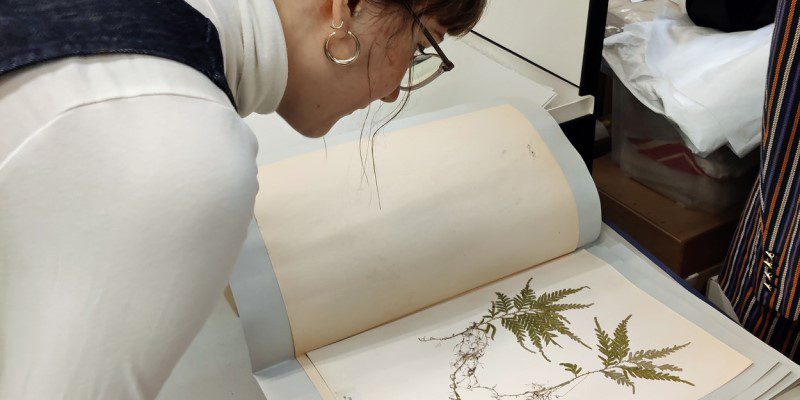
Wilkinson’s mother supported his passion by reading botanical guides and other literature aloud to him. He created field notebooks in Braille and assembled a personal herbarium, with specimens mounted by his mother.
President of the Leeds Naturalists’ Club and Scientific Association
Wilkinson’s visual impairment did not hinder his career progression. He developed the ability to identify over 800 plant species. Together with his cousin Elaine Phillips, he collected the rare Potentilla verna from Ledston Park in Leeds. He also advised local authorities on tree planting and labeling in public parks.
John Wilkinson served as President of the Leeds Naturalists’ Club and Scientific Association, where his mother was made an honorary member in recognition of her support.
In 1915, the University of Leeds awarded Wilkinson an honorary Master of Science degree, emphasizing his role in beautifying Leeds parks and gardens with abundant trees.
Wilkinson’s Herbarium and Legacy
Wilkinson curated a large herbarium, including many extinct or rare specimens. His work was eventually entrusted to the Museums and Galleries of Leeds. He passed away in his hometown in 1937.
About the Leeds Naturalists’ Club and Scientific Association
The Leeds Naturalists’ Club and Scientific Association was founded in 1870. Initially, meetings were held at the Yorkshire College of Science, a hub for engineering and textile technology studies.
The club focuses on the study of natural history through seminars, field meetings, reports, and lectures.
John Grimshaw Wilkinson overcame significant challenges to become a distinguished botanist, leaving behind an impressive legacy of research and a vibrant botanical collection. His life reminds us of the power of perseverance and innovation in the face of adversity.
We hope this article has inspired you to learn more about Wilkinson’s remarkable achievements. What do you think of his innovative methods? Share your thoughts with us on social media!