

Leeds has been the birthplace of numerous talented and notable figures who have gained worldwide recognition through their tireless work. Among them is William Denison Roebuck, a pioneering naturalist and one of the founding members of the Yorkshire Naturalists’ Union. Born in Leeds, Roebuck made significant contributions to science, sparking scientific exploration across Yorkshire. Read more about his life and achievements on leedsname.com.
Childhood and Early Life
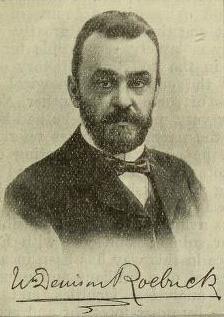
William Denison Roebuck was born in Leeds in 1851. He lived there until he was 17, when his family moved to a summer residence in Pannal. It was here that Roebuck began studying and documenting butterflies and other insects. His observations on bees and related species were later included in the Victoria County History.
Although he had a lifelong interest in entomology, Roebuck did not consider himself an entomologist. Entomology, the scientific study of insects, focuses on acquiring and synthesizing new knowledge about this vast group of organisms.
One of Roebuck’s early publications was Grasshoppers in Yorkshire, which appeared in The Naturalist in 1877.
Career Development
During his career, Roebuck developed an interest in Hymenoptera and was responsible for cataloguing this group of insects for The Victoria History of Yorkshire. He accumulated an immense repository of knowledge and was associated with numerous organizations, including the Yorkshire Naturalists’ Union, the Conchological Society, the Leeds Field Naturalists’ Club, the Leeds Conchological Club, and the Leeds Philatelic Society.
The Yorkshire Naturalists’ Union remained his primary focus. As the Union’s founder, Roebuck became its secretary in 1876. The Union grew to include thousands of members, becoming an influential scientific body.
Roebuck also organized “Fungus Forays,” which later became a key feature of the Union’s activities. He served as the Union’s honorary secretary for nearly 30 years.
Contributions to Science
Between 1884 and 1902, Roebuck edited The Naturalist and organized excursions and meetings to study Yorkshire’s fauna and flora throughout the year.
He also played a role in establishing the Lincolnshire Naturalists’ Union, reflecting his commitment to scientific progress and collaboration.
In 1870, Roebuck co-founded the Leeds Field Club, a group of naturalists dedicated to advancing the study of natural history. Additionally, he helped found the Conchological Society of Great Britain and Ireland, which grew to have influential members across the United Kingdom and the Western world.
Roebuck dedicated much of his research to land slugs, a neglected group at the time. His meticulous work led to the discovery of six new species of slugs within a few years.
Philately and Other Interests
Philately was another of Roebuck’s passions. In 1890, he co-founded the Leeds Philatelic Society with T.C. Skipwith. Philately involves the collection and study of postage stamps, labels, and other postal markings.
Roebuck’s personal collection, particularly his focus on British issues, was donated to the University of Leeds in 1913.
Recognition of William Denison Roebuck
Roebuck’s scientific contributions were widely recognized. In July 1915, the University of Leeds awarded him an honorary Master of Science degree, celebrating his influence on Yorkshire’s natural history.
Roebuck spent years studying the fauna of Yorkshire and Lincolnshire, as well as parts of the British Isles. Between 1904 and 1906, he traveled extensively to Australia, New Zealand, India, South Africa, and Egypt. These expeditions enriched scientific understanding of the spread and dominance of European mollusk species and other organisms introduced by humans to these regions.
William Denison Roebuck passed away in February 1919 and was buried at Lawnswood Cemetery in Leeds.
Roebuck was a remarkable figure who inspired countless followers through his dedication to natural history. His efforts significantly advanced scientific exploration in Yorkshire and beyond. His influence is still felt across various fields, and his legacy endures as a testament to his passion and energy.
We hope this article has provided valuable insights into the life and work of this distinguished Leeds native.