

Have you ever considered the finite nature of our planet and its resources? While we may relocate to another country or continent, there is no alternative planet for us to inhabit. This is why it’s essential to care for the environment and think about the legacy we leave for future generations. Today, we delve into the history of Temple Works, a flax mill once operational in Leeds, and explore the environmental impact of the textile industry. Read more on leedsname.com.
History: The Beginnings
The story of Temple Works begins with the mills owned by John Marshall. By the early 1830s, Marshall’s business was thriving, and by 1842, he owned four mills in Holbeck.
At the time, competitors were constructing factories as Leeds became a hub for the burgeoning textile industry. Marshall, alongside his sons, decided to expand their industrial capabilities. He aimed to produce threads and fabrics instead of merely creating fine yarn for the French market, leading to the establishment of Temple Works.
In 1840, the factory’s grand opening was celebrated with a tea party attended by 2,600 workers. Shortly after, the facility began operations, and a neighboring office building was completed within a few years.
Initially, the factory’s capacity was smaller than planned, and only half the intended spindles were installed. Yarn was converted into threads, but fabric was never woven. Unfortunately, the factory’s launch coincided with a decline in demand for flax, as it faced stiff competition from other nations and was increasingly replaced by cotton.
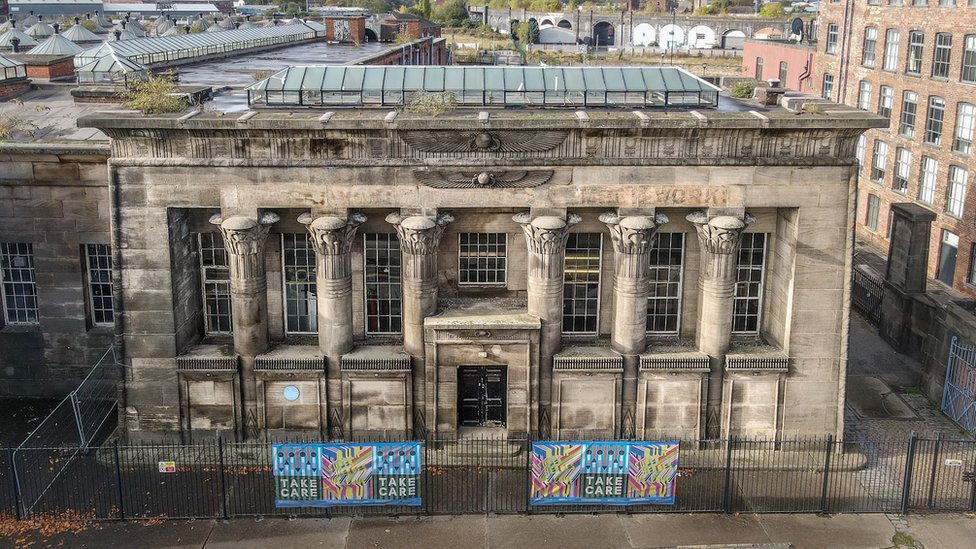
Unique Features of Temple Works
Temple Works boasted a distinctive architectural design. Natural light entered through 60 conical glass skylights, each towering 10 feet above the roof, ensuring well-lit interiors at all times. Below ground, there were market stalls and private baths for workers. A ventilation system circulated steam-heated air throughout the factory, maintaining optimal temperature and humidity levels.
Workers’ Strike and the Fall of an Empire
In August 1871, a strike broke out at Temple Works as workers demanded a 10% pay increase. Management refused to negotiate initially, shutting down the factory. After several days of discussions, operations resumed.
Despite lasting longer than many of its Leeds-based competitors, Temple Works ceased operations in 1886. That year, the factory and all company assets were sold at auction.
The Environmental Impact of the Textile Industry
Compared to modern factories, Temple Works was relatively eco-friendly. Processes were optimized to minimize resource consumption, largely due to the limited technological advancements of the time. However, the textile industry today significantly impacts the environment, especially with the fast fashion boom that has accelerated clothing production and disposal rates.
How Textile Production Harms the Environment
- Water Consumption
Textile production requires enormous amounts of fresh water. For instance, producing one cotton t-shirt consumes 2,700 liters of water—enough to sustain an individual’s drinking needs for 2.5 years. In 2020, the textile industry ranked as the third-largest consumer of water, utilizing nine cubic meters for clothing and footwear production. - Water Pollution
Textile manufacturing pollutes water with dyes and chemicals used in fabric processing. Additionally, washing synthetic fabrics releases microplastics, with polyester shedding up to 700,000 microplastic fibers per wash. These pollutants harm the environment and pose risks to human, animal, and aquatic health. - Greenhouse Gas Emissions
The textile industry accounts for 10% of global carbon emissions, exceeding emissions from international flights and maritime shipping combined. - Low Recycling Rates
Despite efforts to promote recycling, only 1% of used clothing is recycled into new garments. On average, Europeans consume around 26 kilograms of clothing annually, with nearly half (approximately 11 kilograms) discarded each year. Most of this waste is incinerated or sent to landfills.
The story of Temple Works highlights the environmental legacy of the textile industry. While the factory itself was innovative for its time, the modern textile sector has exacerbated environmental degradation. We hope this article has provided valuable insights and encouraged thoughtful consumption decisions before purchasing another item for your wardrobe.