

Every city and region has its own symbols, often connected to nature, the environment, and ecology. A crest serves as a symbolic representation, telling a story about the identity of a place. Today, we’ll explore the symbols of Leeds, delving into their meanings and historical origins, as well as the emergence of the first crests. Read more about this fascinating topic on leedsname.com.
Historical Origins
The eco-symbol of Leeds traces back to 1622 when the borough was granted a new charter that established the office of mayor and a corresponding crest. In 1666, during a heraldic visitation of Yorkshire, these arms were officially recorded. Later, in 1835, additional elements—silver owls—were incorporated, although these modifications were formally recognized only in 1921, alongside changes to the owls’ colours and other details.
In 1974, the borough was dissolved and became part of the much larger metropolitan borough of Leeds. Nevertheless, the new Leeds City Council continues to use its predecessor’s crest.
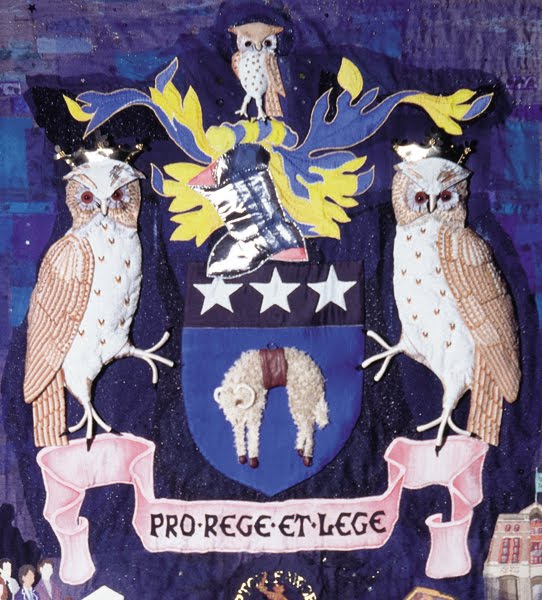
Symbolism: What Does the Crest Represent?
The Leeds crest features three stars, a golden fleece, three owls, and a steel helmet, each with unique significance to the city:
- Golden Fleece: Reflects Leeds’ historical prominence in the wool industry and trade.
- Owls: Initially silver, they originated from the crest of Yorkshire MP Sir John Savile of Howley Hall. Over time, their colour and symbolism evolved.
- Three Stars: These are a key design element that enhances the crest’s visual identity.
- Steel Helmet: Represents state authority and governance.
- Motto: “Pro Rege Et Lege” translates to “For King and the Law,” symbolizing loyalty and justice.
Notably, the owl is a recurring symbol of Leeds and represents the city’s wisdom and heritage.
The Owl as a Symbol of Wisdom
The owl is a powerful symbol with varied meanings across cultures. While it is widely recognized as a symbol of wisdom, its interpretations can differ:
- Greek Mythology: Wisdom and knowledge.
- Egypt and India: Death and the afterlife.
- China and Japan: Sadness or wealth.
- Christianity: Often linked with darkness or misfortune, reflecting ancient superstitions.
Despite its mixed symbolism, in Leeds, the owl stands proudly as an emblem of wisdom and the city’s rich heritage.
The Evolution of Crests
Today, crests are ubiquitous, representing cities, states, and regions. However, their origins are ancient. Early “crests” were rudimentary, comprising cave paintings and depictions of natural elements like the sun, fire, and water. These symbols evolved significantly during the Crusades.
One of the first English monarchs to adopt a personal crest was Richard I, known as Richard the Lionheart. His crest featured three golden lions (originally leopards), which later became a hallmark of English royal dynasties.
Each crest tells a unique story, with every element reflecting an aspect of the city’s history, identity, or values.
The crest of Leeds is not just a visual emblem; it encapsulates the city’s history, industries, and cultural identity. Each symbol within the crest tells a story, connecting the present-day city with its rich heritage.
We hope you found this article informative and insightful. What do you think about the Leeds crest? Which element resonates with you the most? Share your thoughts with us on social media!