

Park · Leeds · ⭐ 9.3/10 · 2462 reviews · updated: 2026-08-04 20:21:00
Address: Town St, Middleton, Leeds LS10 3SH, United Kingdom
Middleton Park — the oldest woodland in West Yorkshire, sitting on top of a coalfield
Middleton Park covers 630 acres in south Leeds — very nearly a square mile — and 200 of those acres are ancient woodland that has been continuously wooded since at least 1600, making Middleton Woods the largest surviving ancient wood in West Yorkshire. What makes it extraordinary is what lies under the bluebells. This hillside was one of the earliest industrial coalfields in Britain, worked from before 1300, and the woodland floor is pockmarked with more than 270 bell pits — the shallow, bowl-shaped shafts of medieval mining — two areas of which are protected as Scheduled Ancient Monuments. The coal that came out of this ground financed the world’s first railway authorised by Act of Parliament, and that railway is still running today.
Highlights
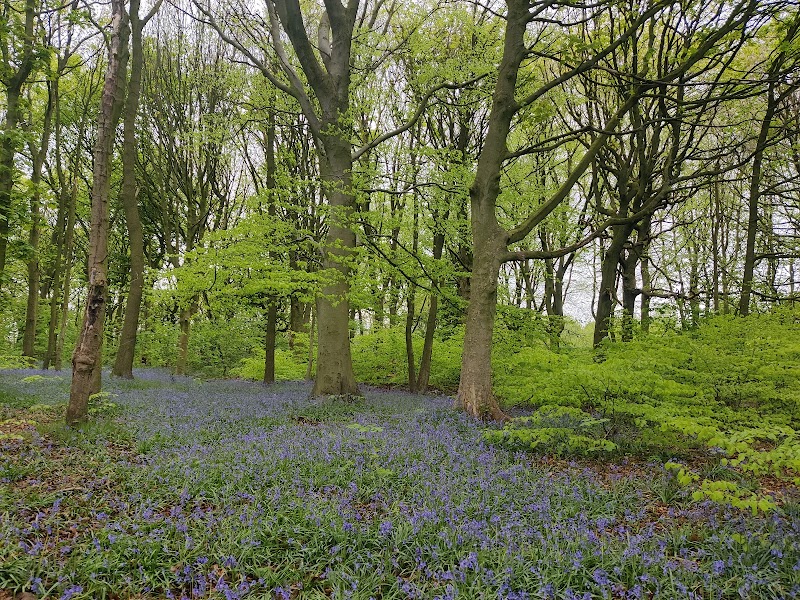
- Middleton Woods — 200 acres of oak-dominated ancient woodland, the largest in West Yorkshire, with a spring bluebell display that draws people from across the city and the less common yellow archangel alongside it.
- The bell pits — over 270 shallow mining hollows scattered through the trees, dug from before 1300; the Middleton Little Seam they chased was only about 80 centimetres thick, yet each pit yielded roughly a hundred tons of coal.
- The replica horse gin — a reconstructed horse-driven winding mechanism standing behind the visitor centre, showing exactly how coal was hauled up those shafts before steam.
- The Middleton Railway — the world’s oldest continuously working railway, authorised in 1758 and run by volunteers since 1960, with its Park Halt station on the edge of the park.
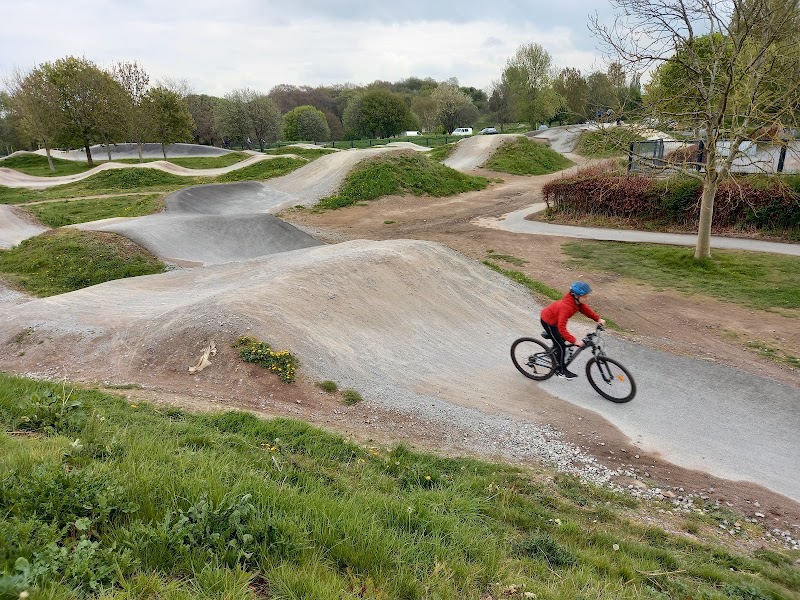
- Leeds Urban Bike Park — opened on 1 December 2017 with a pump track, a BMX track and mountain bike trails threading into the woods; it has been used well over 300,000 times since.
- The lake and the visitor centre — a fishing lake originally created to supply water for the colliery’s steam engines, and a modern centre with a café and toilets built with lottery funding awarded in 2008.
What you’ll find
The park divides fairly cleanly into three: the open recreation ground, the woodland, and the reclaimed industrial edges. You can move between them in minutes, which is why Middleton feels much larger and more varied than a single map suggests.
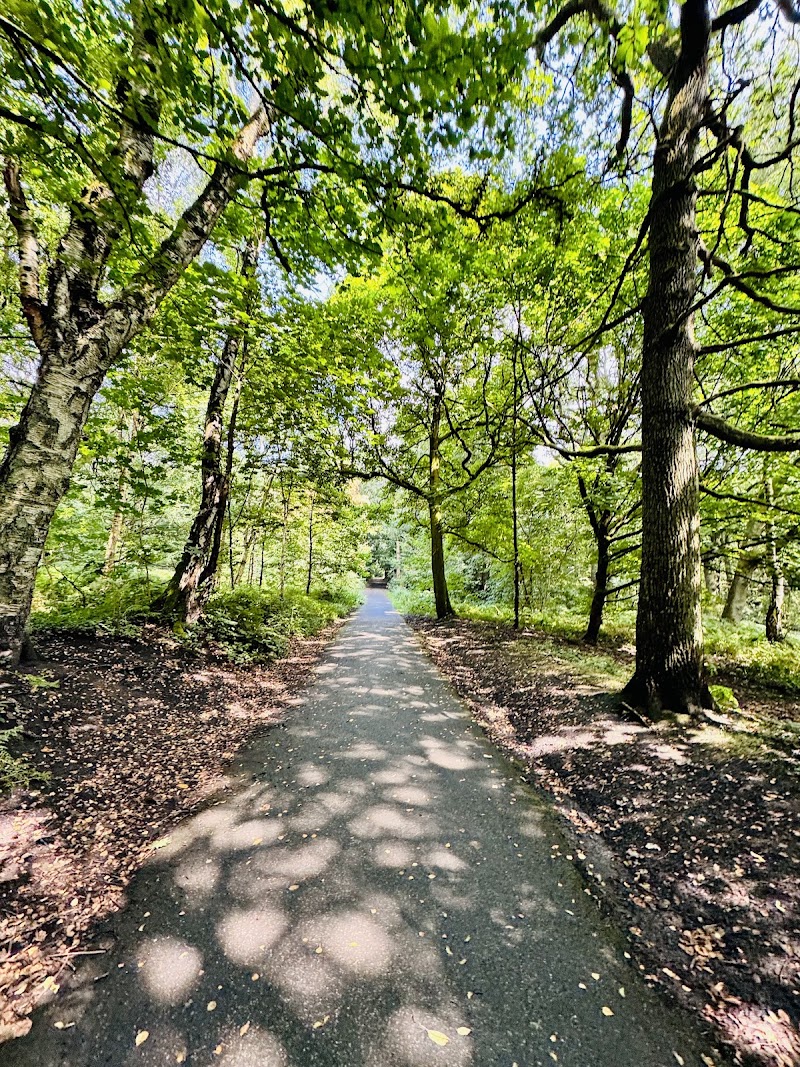
- Oak-dominated woodland mixed with birch, hazel, elder, sycamore, beech and sweet chestnut, carrying a spring ground flora of bluebell, wood anemone, wood sorrel and lesser celandine.
- Wildlife that depends on old woodland — bats, mice and voles, woodpeckers, and a deep invertebrate and fungal community that only develops where trees have stood for centuries.
- Waymarked paths that follow the historic wagonways along which coal was moved to the railway, so the walking routes are literally the industrial layout of the eighteenth century.
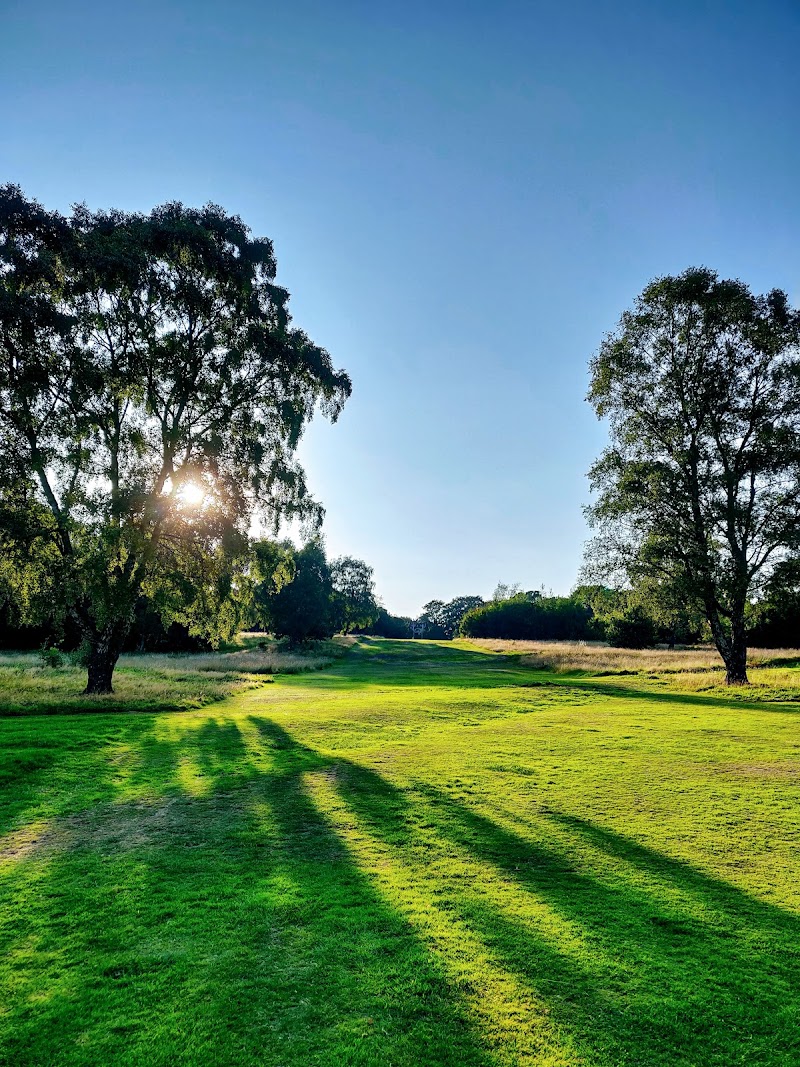
- The Clearings, a designated area for model aircraft flying, alongside playgrounds, open grassland and the former golf course landscape.
- Middleton Park Equestrian Centre, which runs riding activities on a deliberately affordable community basis, and mobility scooter hire available from the visitor centre.
- An earthwork dating from 1204 that still marks the old boundary between Middleton and Beeston, and Middleton Lodge, built around 1760 by the Brandling family.
Things to do — and who it’s for
- Bluebell walkers and photographers — late April and early May turn the woodland floor solid blue, and because the wood is large the display holds up even when the paths are busy.
- Cyclists and BMX riders — the bike park caters for everyone from first pump-track laps to technical woodland trails, all in one place.
- Industrial history enthusiasts — bell pits, wagonways, a horse gin and the world’s oldest working railway within a single park is a combination that exists nowhere else.
- Families — playgrounds, a café, level paths near the visitor centre and a heritage train running to the park’s edge make for an easy day with children.
- Runners — Middleton Woods hosts a free weekly timed parkrun, run largely on woodland tracks rather than tarmac.
- Anglers and quiet visitors — the lake is fished, and the far woodland compartments stay genuinely peaceful even on a summer weekend.
Getting there & practical
The park lies in the Middleton district of south Leeds, a few miles out from the centre, with South Leeds Stadium — home of the Hunslet rugby league club — on its northern boundary. Frequent city bus services on routes 12 and 13 run out from the city centre roughly every fifteen minutes, seven days a week, and the 12 continues north to link Middleton directly with Roundhay Park. The nearest mainline railway station is Leeds City. The more interesting approach is the Middleton Railway itself, which runs heritage trains from its Hunslet base to Park Halt on the park’s edge on operating days; that is a separately ticketed heritage service rather than public transport. Entry to the park is free, it is open all year, and there is ample free parking, including near the bike park. Allow an hour for a woodland loop, or half a day if you combine the woods, the lake and the railway. Woodland paths hold mud well into late spring, so proper footwear repays itself.
When to visit
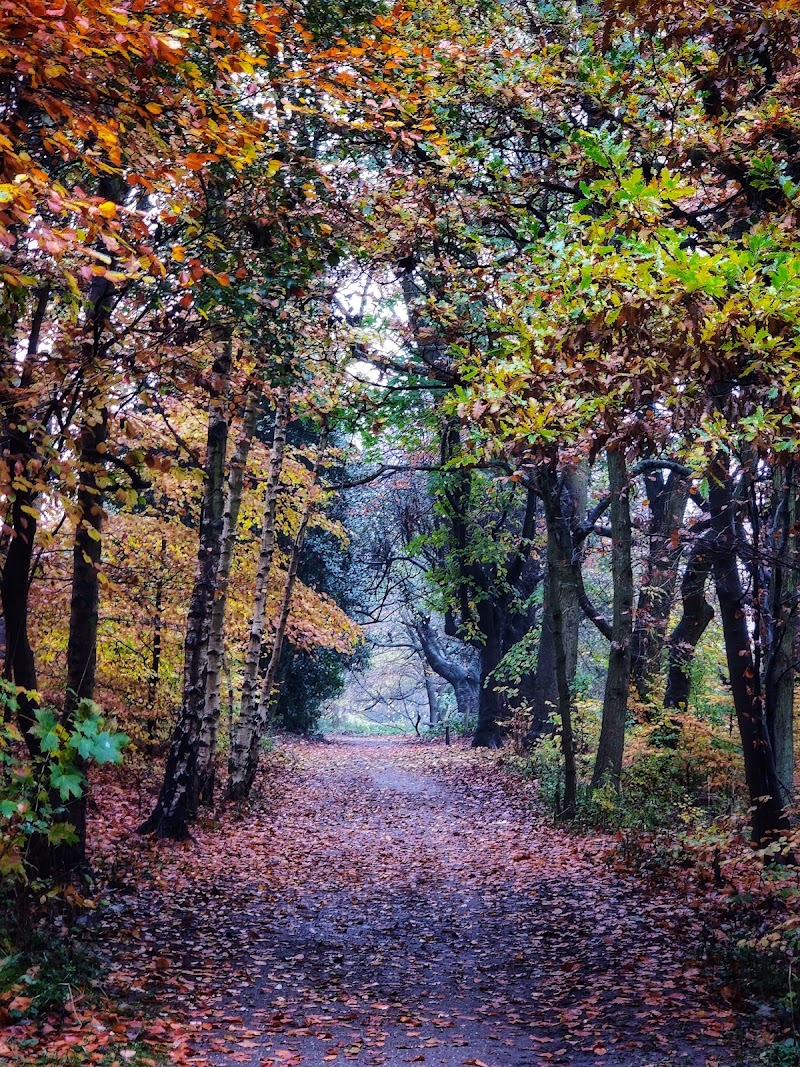
Spring is unambiguously the peak: the bluebells in late April and early May are the single best natural spectacle in south Leeds, with wood anemone and wood sorrel before them. Summer opens up the recreation ground, the lake and the bike trails, and the closed canopy makes the wood pleasantly cool on hot days. Autumn brings colour to the oaks and beeches and, more unusually, one of the richest fungal seasons in the district — a direct consequence of centuries of unbroken woodland. Winter is when the archaeology comes out: with the undergrowth down and low sun raking across the ground, the bell pits and wagonway embankments read like a plan drawn on the forest floor, and it is far and away the best time to see what this place actually is.
Good to know
Coal was being dug here before 1300, using bell pits — a shaft sunk until it reached the seam, then widened out at the bottom into a bell shape until the roof became unsafe, at which point the miners abandoned it and started again a few metres away. That is why there are over 270 of them. The seam being chased, the Middleton Little Seam, was only around 80 centimetres thick, but each pit produced roughly a hundred tons. By the 1760s the mines had gone much deeper, with shafts around 45 metres and pillar-and-stall working underground; a serious explosion in 1758 was caused by gunpowder igniting methane that had built up in old galleries, and by the late 1700s a Newcomen engine was pumping water out of the workings. The last mine, the Wood Pit, was sunk in 1813–14 and worked until the late 1890s.
The Brandling family owned the estate and built Middleton Lodge around 1760, but their real monument is the railway. In 1758 Charles Brandling obtained an Act of Parliament for a wagonway to carry his coal down to Leeds — the first railway anywhere in the world to be authorised by statute — built to a gauge of 4 feet 1 inch. In 1812 it made history a second time. John Blenkinsop, the colliery’s agent, had patented a rack-and-pinion system to give locomotives traction on iron rails, and the engineer Matthew Murray built a machine to use it. Named Salamanca, after a battle fought that year, it was the first commercially successful steam locomotive in the world and the first to use two cylinders, cranked at right angles so it could restart from any position. The Middleton Railway has been run by volunteers of the Middleton Railway Trust since 1960 and is the world’s oldest continuously working railway.
The park as the public knows it dates from 1920, when the estate’s owners, the Leeds charity founded on the bequest of Thomas Wade, granted it to Leeds Corporation on a 999-year lease at a rent of one pound a year — a peppercorn arrangement that has held ever since, so the land is still owned by Wade’s Charity and managed by the council. A municipal golf course opened on 8 April 1933 with nine holes, using Middleton Lodge as its clubhouse; a second nine was added in 1979 and the course finally closed in 2016, leaving an open landscape now absorbed back into the park. Lottery funding awarded in 2008 paid for the visitor centre, café and the replica horse gin. Leeds Urban Bike Park opened on 1 December 2017 and reached its 300,000th use within a few years, and a reclaimed colliery site at Middleton Broom has since been folded back into the park’s boundary.
Visitor tips
- Come for bluebells in the last week of April or the first week of May, and go deeper than the first hundred metres of wood — the best displays are away from the main entrances.
- Check the Middleton Railway’s operating days before planning to arrive by train; it runs to a heritage timetable rather than a daily service.
- Winter is the archaeology season. Once the leaves are down, walk the woodland with the low sun behind you and the bell pits become obvious hollows rather than vague dips.
Questions & answers
Is Middleton Park free? Yes — free entry, free parking, open all year. The heritage railway and some organised activities are ticketed separately.
How big is it? 630 acres, close to a square mile, of which 200 acres are ancient woodland.
What are the strange circular hollows in the wood? Bell pits — the collapsed remains of medieval coal shafts, dug from before 1300. There are more than 270 of them, and two sections of the park are protected as Scheduled Ancient Monuments because of them.
When are the bluebells at their best? Typically late April into early May, depending on the season. Wood anemone, wood sorrel and lesser celandine come slightly earlier, and yellow archangel, which is less common, grows here too.
Can I actually ride the world’s oldest railway? Yes, on operating days. The Middleton Railway runs heritage trains from its Hunslet base to Park Halt at the edge of the park, and it has been run by volunteers of the Middleton Railway Trust since 1960.
Is there anything for mountain bikers? Yes. Leeds Urban Bike Park, opened in December 2017, has a pump track, a BMX track and mountain bike trails running through the woodland, and it has been used more than 300,000 times.
Is the park accessible? The visitor centre area, the lake and the main routes are surfaced and manageable, and mobility scooters can be hired from the visitor centre. Deeper woodland paths are uneven and can be muddy.
Is the golf course still there? No. It opened in 1933 with nine holes, gained a second nine in 1979 and closed in 2016; the ground is now open parkland, and its old clubhouse was Middleton Lodge, built by the Brandlings around 1760.
Photos
Show 1 more photos
Visitor reviews
Reviews last updated: 2026-08-04 20:21:00
Data is refreshed monthly. Sources: leedsname.com and editorial picks based on reviews.
A peaceful wood with well-established trees, combining small trails if you choose to go off the beaten track, as well as wide paths for easy access for bikes and walking sticks. A walk from the John Charles sports centre…
Middleton Park is a great place to walk the dog or play with the children. There's lots of open space on the field, there's a lake where you can sit and relax. There's a café where you can get a bite to eat or a drink. A…
Came for an evening walk, was only there for 20-30 minutes, so didn't have much time to explore the area beyond a walk around the pond.
Stunning views, plenty of car parking spaces and enough greenery around to spend the…
A peaceful and underrated park, perfect for families and quiet walks.
Middleton Park is a very underrated park and a great place to spend time with family.
It’s perfect for a quiet walk through the woods, and there is…
A large and semi-wild park with stunning views of the Leeds skyline. Unfortunately, it's full of motorbikes, which can be heard in almost every part of the park. Besides that, it doesn't feel safe here.