

Environmental concerns are on everyone’s mind as they directly impact health, well-being, and the future. Leeds, a beautiful city, offers a variety of transport options, including eco-friendly solutions. With its extensive network of roads, buses, and railways, Leeds continues to advance sustainable mobility. Read more about this topic on leedsname.com.
Types of Transportation in Leeds
Public transport in Leeds is managed and developed by West Yorkshire Metro. Buses dominate the public transportation system, with Leeds City Bus Station providing intercity connections to neighboring towns. Several operators service various routes across the city.
The Leeds railway station, one of the busiest in the UK in 2017, highlights the city’s strong rail network. Leeds is served by 16 railway stations, with Parkway Station opening in 2016 to connect to the airport.
The Leeds Bradford Airport, located 13 kilometers from the city center, offers flights to 8 domestic and 70 international destinations. It ranks as the tenth busiest airport outside London.
Air Quality Concerns
Airports and clean air often conflict. In 2019, the World Health Organization labeled Leeds’ air quality as “hazardous,” with Neville Street, near the railway station, identified as the most polluted.
A proposal to create a Clean Air Zone in North Leeds and the city center aimed to reduce emissions by imposing fees on older vehicles and installing electric car charging stations. However, improved air quality by 2020 made the project unnecessary.
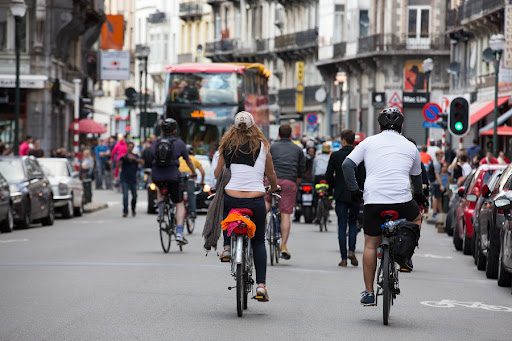
Despite a high number of cars contributing to Leeds’ ninth-place rank for traffic congestion in 2018, cycling is growing in popularity. In 2023, Leeds introduced an electric bike rental program, Leeds City Bikes.
Cyclists can explore scenic routes, such as the 100-kilometer circular path around Leeds or the towpath along the Leeds and Liverpool Canal. The city also promotes pedestrian-friendly paths, parks, and guided walking tours organized by groups like the Ramblers Association and YHA.
How to Improve Air Quality in Leeds
While the city sees a rise in electric vehicles and cycling, challenges remain. Leeds is a major economic hub with a busy airport, making complete environmental harmony difficult. However, small individual actions can collectively lead to significant improvements:
- Choose Bicycles Over Cars: Reduce car usage, opting for bikes, public transport, or walking whenever possible.
- Avoid Burning Coal: Refrain from using coal for barbecues or other activities. Smoking also harms both the environment and health.
- Invest in Electric Cars: If a vehicle is necessary, consider switching to an electric car.
- Limit Air Fresheners: Avoid using artificial air fresheners.
- Minimize Carpet Use: Opt for alternatives to carpeting, which can trap pollutants.
- Plant More Trees: Initiate local tree-planting events to boost green cover.
- Shop Responsibly: Reduce over-purchasing and donate unwanted clothes.
- Recycle and Dispose Properly: Sort and recycle waste appropriately.
Leeds, while not renowned for its air quality, offers avenues for eco-friendly living. The city’s emphasis on sustainable transport, combined with individual efforts, can improve the overall environmental outlook.
We hope you found this article informative and insightful.