

Leeds is renowned for its economic and financial activities, often hailed as the economic hub of the United Kingdom. The city hosts numerous companies and financial institutions that thrive in this bustling metropolis. However, economic growth often clashes with environmental sustainability. Today, we explore the history of Leeds Brewery, its operations, and the broader environmental impact of breweries. The brewing industry, as one of the largest industrial consumers of water, has significant environmental implications, including energy consumption, wastewater, solid waste, and air emissions. Read more on leedsname.com.
The Founding of Leeds Brewery
Leeds Brewery was established in 2007 by university friends Michael Brothwell and Sam Moss.
Located in the trading area of Beeston, on the outskirts of Leeds, the brewery operated a 20-barrel brewing plant with a weekly production capacity of 150,000 pints. Leeds Brewery produced several beer varieties, including Leeds Pale, Leeds Best, Yorkshire Gold, and Midnight Bell. Notably, Midnight Bell, a 4.8% mild ale, won accolades such as “Best Beer from a New Brewery” at the Peterborough Beer Festival and a gold award for dark cask ale at the SIBA Beer Awards.
A year after its opening, Leeds Brewery engaged fans of Leeds United Football Club to name a new beer through an online poll. The beer was named after Leeds United player Lucas Radebe, with 10p from every pint sold donated to the club’s transfer fund.
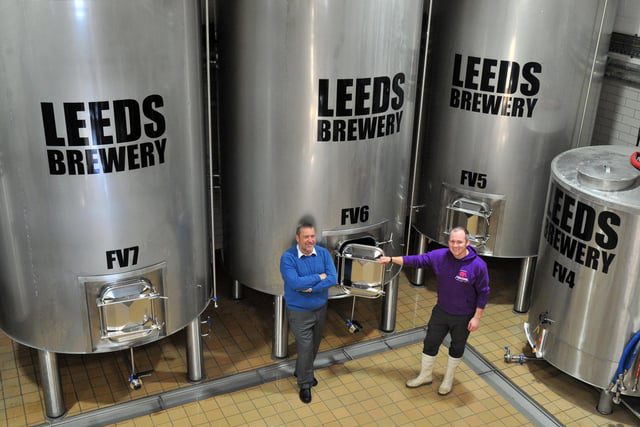
The Closure of Leeds Brewery
In addition to brewing beer, Leeds Brewery owned and operated seven pubs in Leeds. Notably, The Brewery Tap included a mini-brewery for onsite beer production. In 2013, the brewery began opening pubs in York. However, in 2016, Leeds Brewery sold its pubs to Camerons Brewery. Seven years later, Leeds Brewery ceased operations, and the brand was sold.
About Camerons Brewery
Camerons Brewery, founded by John William Cameron in Stranton in 1865, was once the largest independent brewery in Northeast England and one of the oldest breweries in the region. It was also a major employer during its heyday.
The company expanded significantly and, by the 1960s, owned 750 licensed premises across the Northeast and North Yorkshire. However, Camerons Brewery lost its independence in subsequent decades. In 1983, it was acquired by Barclay Brothers and later sold to Brent Walker in 1988. Wolverhampton & Dudley acquired Camerons Brewery in 1992. Today, it is the ninth-largest brewery in the UK, with around 80% of its business involving contract brewing for other companies.
Environmental Impact of Breweries
Beer is the fifth most consumed beverage in the world, following tea, milk, and coffee. However, its production poses significant environmental challenges:
- High Water Consumption: Brewing requires large amounts of water for mixing malt extracts, hops, and sugar, fermentation, cleaning, and sterilization. A substantial portion of this water is discharged as wastewater.
- Energy Use: Brewing is energy-intensive, relying on various sources of alternative and conventional energy.
- Wastewater and Solid Waste: The brewing process generates significant amounts of wastewater and solid waste, requiring safe disposal or treatment.
- Air Emissions: Brewing and fermentation processes release emissions into the atmosphere, contributing to air pollution.
Health Considerations
Aside from environmental concerns, excessive beer consumption can harm human health. Regular intake can lead to brain cell damage, spinal cord dysfunction, myocardiodystrophy, liver cirrhosis, hepatitis, pancreatitis, gastritis, neuropathy, and beer alcoholism, a condition that requires treatment.
Leeds Brewery’s story highlights the intersection of economic progress and environmental concerns. While brewing contributes to the economy, its environmental and health implications cannot be ignored. We hope this article provided valuable insights into the brewery’s history and the environmental challenges associated with the industry.