

Water is humanity’s most valuable resource. It’s difficult to imagine life or daily routines without it. Yet, when water flows freely from the tap, we often take it for granted. Only when water supply issues arise do people truly reflect on how dependent we are on this resource. Centuries ago, water was scarce, so it was used sparingly: people drank less, bathed infrequently, and rarely washed clothes. Today, we’re sharing the story of how water supply systems were developed in Leeds. Read more on leedsname.com.
Population Growth and Increased Demand for Water
At the end of the 17th century, the population of Leeds began to grow rapidly, leading to increased water consumption. Leeds sought to emulate other cities by building a water supply system, following the examples set by London, Bristol, and Norwich.
To undertake this task, Leeds enlisted engineer George Sorocold and surveyor consultant Henry Gilbert. George Sorocold, considered the first British civil engineer, studied at Cambridge University and fathered 13 children, though only 8 survived. Sorocold was experienced in constructing water supply systems, having contributed to Macclesfield’s water supply in 1685 and built the first waterworks in Derby. In total, he constructed about ten water supply systems across the UK. Therefore, Leeds authorities turned to Sorocold for assistance in constructing their water system.
The Construction of Leeds’ Water Supply System
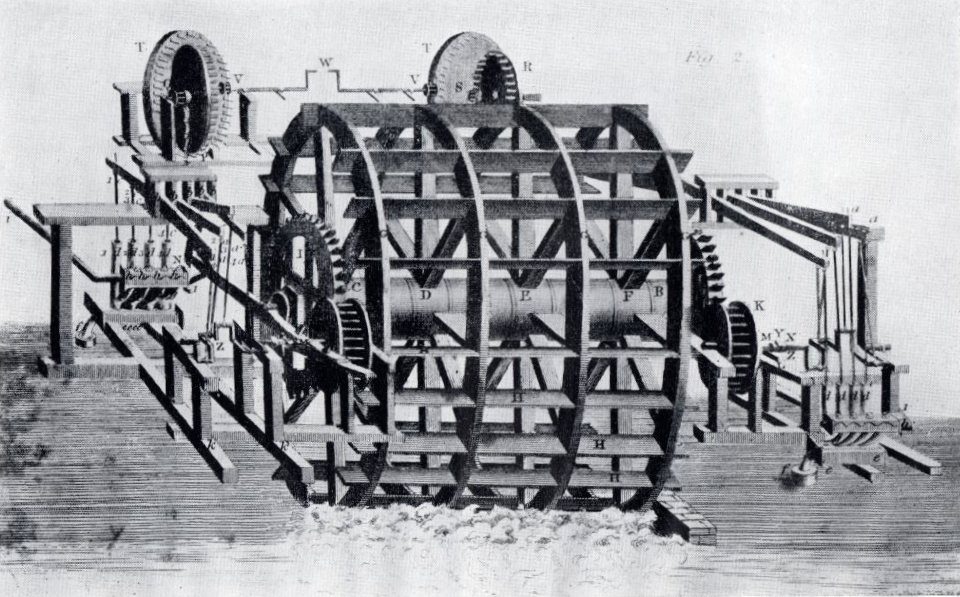
Between 1693 and 1694, the Leeds Corporation approved Sorocold’s waterworks project and financed a pump to draw water from the River Aire. This system aimed to deliver water to every household on every street, though the service came at a cost.
The system included five main pipes running from the Pitfall Mill engine house to reservoirs. These reservoirs were located on Town Cliff in Lidgate, behind St. John’s Church. Before entering the reservoirs, water was settled and purified before being piped to houses through lead pipes. However, the supply was insufficient for everyone, leading to the construction of a new reservoir at the top of Briggate in 1795.
Leeds was one of the first cities in Britain to supply individual homes with water. Yet, the service was limited to the wealthy. By the early 19th century, about 2,000 homes were connected to the water supply, serving a population of around 7,000. With rapid population growth, the number of connections increased from 3,000 to 22,732 within a decade. Eventually, the Leeds Corporation acquired the water company for £250,000.
Sewage Systems in Leeds
While discussing water supply, it’s essential to mention Leeds’ sewage system. In the 1830s, human and household waste was disposed of directly onto the streets, as no formal sewage system existed in the city. This led to foul odors, filth, and unsanitary conditions, creating a breeding ground for infectious diseases. Consequently, Leeds experienced frequent cholera outbreaks and other illnesses.
Authorities were slow to recognize the connection between poor sanitation and disease. Only in the 1840s, after commissions investigated epidemic causes, did officials understand the impact of dumping household waste on the streets and discharging sewage directly into the River Aire. Mortality rates were alarming, with few people living beyond 44 years.
These investigations prompted plans to build sewage collectors. However, progress was slow. It wasn’t until 1850 that construction plans were approved, and several years later, the sewage system became operational. Eventually, water supply was extended to every home, not just the wealthy.
Fascinating Facts About Water
The history of Leeds’ water supply is both intriguing and challenging. Today, we enjoy access to clean water, but to appreciate its value, here are some fascinating facts:
- Our planet will never have more water than it does today.
- Although 70% of the Earth’s surface is covered with water, only 2% is drinkable.
- Humans feel thirsty after losing just 1% of their water. Losing 12–13% requires medical intervention; otherwise, death may occur.
- Over 80% of diseases worldwide are waterborne.
- According to UNESCO, Finland has the best drinking water in the world.
This educational material highlights the importance of water in Leeds’ history and in our daily lives. Have you ever reflected on the value of water in your life? Share your thoughts in the comments.